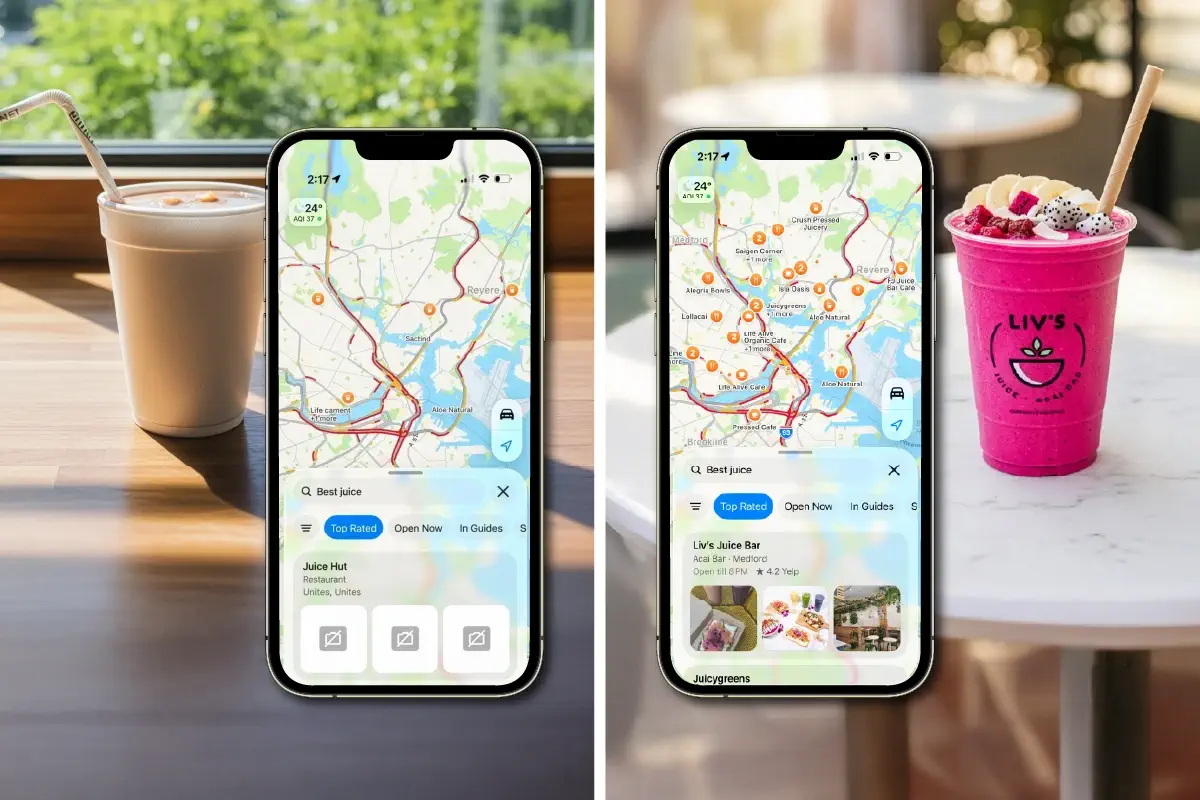
• Restaurant SEO is how customers find you. 93% of diners use online search to find restaurants. If you're not showing up, you're invisible to nearly everyone actively looking for food in your area.
• Your Google Business Profile is your most important asset. It controls what appears in the local 3-pack, Google Maps, and direct name searches. An incomplete GBP is leaving money on the table.
• Reviews are a ranking factor and a trust signal. Volume matters more than perfection - a restaurant with 200 reviews and a 4.3 rating outranks one with 15 reviews and a 4.8.
• Your website needs to be fast, mobile-friendly, and built for direct ordering. Every customer who orders through your site instead of a third-party delivery app is money you keep.
• Schema markup tells Google exactly what your restaurant is. Structured data helps you earn rich snippets, appear in voice search results, and stand out in AI-generated answers.
• SEO compounds over time. Most restaurants see meaningful results in 3-6 months. The ones who win just keep doing the fundamentals better than everyone else.
For a tactical checklist you can start on today, see 17 Restaurant SEO Tips That Actually Work in 2026.
Restaurant SEO is the process of making your restaurant show up when people search for food in your area. It's a combination of optimizing your Google Business Profile, building a website that Google can understand, earning trust signals like reviews and backlinks, and structuring your data so search engines - and the AI systems behind them - know exactly what you offer.
In practice, it comes down to three goals:
• When someone searches "best tacos in Austin," your taqueria appears in the results.
• When someone types your restaurant name, the top result is your website - not a third-party delivery app taking a cut of every order.
• When someone searches "restaurants open now near me," you're in the local 3-pack that gets all the clicks.
Restaurant SEO has two main parts. Local SEO covers Google Maps, the local 3-pack, and "near me" searches - the stuff that gets people through your door or ordering directly from you. Website SEO covers your actual site ranking in organic search results. You need both working together. For a deeper dive into the local side, read Local SEO for Restaurants: 15 Proven Strategies.
Restaurant owners often think of SEO as optional - something only big chains need. But the search landscape has changed dramatically, and independent restaurants that ignore it are losing ground every month.
93% of diners use online search to find restaurants. That's not a buzzword stat - it's the reality of how people pick where to eat. When a customer is scrolling through Google Maps at 6:30 PM trying to decide between your place and the one down the block, whatever shows up in those results wins. If you're looking for a comprehensive breakdown of why this matters, read Google: Your Restaurant's Digital Front Door.
When someone searches for restaurants, Google shows a map with three results before anything else. Those three spots get the vast majority of clicks. Everyone below the fold gets crumbs. The restaurants in the 3-pack aren't necessarily the best - they're the ones that did the best job telling Google they're relevant, active, and trusted. For a step-by-step approach to claiming one of those spots, see How to Win on Google Maps.
When customers search your restaurant name and click on a third-party delivery app instead of your website, you just lost 15-30% of that order to commission fees. Good SEO sends customers to you directly. Commission-free ordering on your own domain means you keep every dollar of revenue from those orders.
Chowly customer Taqueria El Tapatio in Santa Clarita, CA saw a 256% increase in revenue after shifting more ordering to their direct channels and investing in their online presence. That's what happens when customers find you - not a middleman.
Google AI Mode, ChatGPT, and Perplexity are now answering restaurant queries directly. When someone asks an AI assistant "what's the best Italian restaurant near me for a date night," the answer pulls from your Google Business Profile, your website content, your reviews, and your structured data. Restaurants that have all four optimized get recommended. Restaurants that don't get skipped entirely.
This means the old "just be on Google" approach isn't enough. Your content needs to be structured so AI systems can read it, understand it, and cite it. We'll cover exactly how to do that throughout this guide.
Restaurant SEO comes down to five core areas. Nail these, and you'll outrank the vast majority of restaurants in your market.
Your Google Business Profile (GBP) is the single most important piece of your SEO puzzle. It's what shows up in the local 3-pack, in Google Maps, and when someone searches your name directly. An incomplete or outdated GBP is like having a great restaurant with no sign out front.
The basics every restaurant needs:
• Claim your listing at business.google.com
• Use your exact business name (don't stuff keywords into it)
• Pick the right primary category (e.g., "Mexican Restaurant," not just "Restaurant")
• Add every secondary category that applies
• Enter your complete address and verify it
• Set your hours accurately - and update them for holidays
• Add your phone number and website URL
What most restaurants miss:
• Ordering link: Point this to YOUR website, not a third-party delivery app. Every order through your own system means zero commission fees. For a walkthrough of getting this right, see Cleaning Up Your GBP Ordering Links.
• Photos: Businesses with photos get 42% more direction requests on Google Maps. Add at least 10-15 quality photos of your food, interior, and exterior. Update them monthly.
• Menu: Add your full menu to GBP. In 2026, this isn't optional - it's expected.
• Posts: Google Business posts are like free ads. Share specials, events, and new menu items weekly.
• Q&A section: Add your own frequently asked questions and answers. Cover hours, parking, allergen info, group dining - the stuff people actually ask about.
Your GBP profile should link to your direct ordering page. This is one of the biggest missed opportunities for restaurants - you're literally handing customers to companies that charge you a commission on every order. For a complete GBP audit checklist, see Get Found First on Google: Restaurant SEO Checklist for GBP.
Chowly's Google Business Profile tools help restaurants manage their GBP listings, keep ordering links pointed at their direct channels, and ensure their profile stays complete and current. If you're starting from scratch, the Google Business Profile Primer walks you through the setup process step by step.
Reviews are both a ranking factor and a trust signal. Google uses review quantity, quality, and velocity (how often you get new ones) to determine where you rank in local search. But reviews do more than influence the algorithm - they convince real people to choose you over the restaurant next door.
The numbers are clear: A restaurant with 150 reviews and a 4.3 rating will outrank one with 20 reviews and a 4.8 rating. Volume matters. Recency matters. And how you respond matters.
How to systematically get more reviews:
• Ask at the point of sale. The single most effective method. When someone says "that was great," your staff should say, "Would you leave us a quick Google review? It helps us a lot."
• Add a review link to receipts and follow-up emails. Make it one tap to get to your review page.
• Put a QR code on your tables that goes directly to your Google review page. No searching, no friction.
• Train your staff to identify happy moments and ask naturally.
• Follow up after online orders with a friendly review request. Customers who just had a great delivery experience are primed to leave feedback.
How to handle bad reviews (and why it matters for SEO):
Responding to every review - good and bad - within 48 hours signals to Google that you're an active, engaged business. But there's a right way to handle negative feedback:
• Respond professionally and quickly. Don't get defensive.
• Acknowledge the issue and offer to make it right.
• Take the conversation offline: "We'd love to make this right - please email us at..."
• Look for patterns. Multiple complaints about slow service? Fix the actual problem, not just the review.
• Never argue publicly. Every potential customer reading that review is watching how you handle it.
Google Reviews and AI search: AI-powered search engines pull directly from your Google Reviews when generating recommendations. If someone asks ChatGPT or Google AI Mode "best pizza near me," the systems analyze your review text, your rating, and your response patterns. Restaurants with detailed, recent reviews that mention specific dishes, atmosphere, and experiences get cited more often.
For more on building your online visibility through reviews and other signals, read 5 Ways to Boost Your Restaurant's Online Visibility.
Your website is where you control the customer experience - and where you capture orders without paying commission fees. But it also needs to be built so Google can find it, read it, and rank it.
Technical must-haves:
• Fast loading: If your site takes more than 3 seconds to load, people leave. Compress images, minimize code, and use a quality hosting provider. Google uses page speed as a ranking factor.
• Mobile-first design: Over 70% of restaurant searches happen on phones. If your site isn't mobile-friendly, you're invisible to most potential customers.
• HTTPS: That little lock icon in the browser. Non-secure sites get penalized by Google and scare off customers who want to place orders.
• Clean URL structure: Use readable URLs like /menu and /order-online, not random strings of numbers.
Content that ranks:
• Menu page: Your full menu should be on your website as HTML text - not a PDF. Google can barely read PDFs. Voice assistants can't read them at all. Actual text on the page ranks for dish-specific searches and gives AI systems something to cite.
• Location pages: If you have multiple locations, each one needs its own page with unique content, address, hours, and an embedded Google Map.
• About page: Tell your story. Include your history, your team, what makes you different. This builds trust with customers and gives Google more content to index.
• Blog content: Articles about your cuisine, recipes, local food culture, and events help you rank for a wider range of searches and establish topical expertise.
• FAQ page: Frequently asked questions are powerful for SEO because they match exactly how people search. They're also one of the easiest things to add to your site.
Every page on your website should make it dead simple to order directly from you. Put that button everywhere. Every visitor who orders through your site instead of a third-party app keeps more money in your pocket.
For a deeper dive into designing a website that converts visitors into orders, see Restaurant Website Design: Real Examples That Convert Visitors into Orders.
Schema markup is code you add to your website that tells Google exactly what your restaurant is, what you serve, where you're located, and how to order. Think of it as a translation layer between your website and search engines. Without it, Google has to guess what your content means. With it, Google knows precisely - and rewards you with richer search results.
Why schema markup matters for restaurants in 2026:
• Rich snippets: Restaurants with proper schema markup can show star ratings, price ranges, hours, and menu items directly in search results. These enhanced listings get significantly higher click-through rates.
• Voice search: When someone asks Alexa or Google Assistant "what time does [your restaurant] close," the answer comes from your structured data. No schema? No answer.
• AI-powered search: Google AI Mode and other generative search tools rely heavily on structured data to generate accurate restaurant recommendations. Schema markup makes your restaurant "machine-readable."
Key schema types for restaurants:
• Restaurant schema: Your name, address, cuisine type, price range, hours of operation, and contact info.
• Menu schema: Individual menu items with descriptions and prices. This is what powers "show me the menu for..." queries.
• LocalBusiness schema: Reinforces your location, service area, and business type.
• Review schema: Aggregates your ratings for display in search results.
• FAQ schema: Marks up your frequently asked questions so they can appear as expandable answers in Google search results and get cited by AI systems.
How to add schema markup:
If you're not technical, don't panic. Most modern website builders and CMS platforms have plugins or built-in tools for adding structured data. If you're on WordPress, plugins like Yoast SEO or Rank Math handle the basics. If you have a custom site, your web developer can add JSON-LD markup to your pages - it's a standardized format that takes a few hours to set up properly.
The restaurants that invest in structured data now will have a significant advantage as AI search becomes the primary way people discover where to eat. This is one of the highest-impact, lowest-effort investments you can make in your online presence.
Local signals tell Google that your restaurant is real, established, and trusted in your community. They're the digital equivalent of word-of-mouth - proof that you're an active part of your local food scene.
NAP consistency: Your Name, Address, and Phone number should be EXACTLY the same everywhere online. "123 Main St" vs. "123 Main Street" vs. "123 Main St." - these inconsistencies confuse Google and hurt your rankings. Audit every listing and make them identical.
Citations: Get listed on every relevant directory: Yelp, TripAdvisor, Facebook, Apple Maps, Bing Places, Foursquare, and industry-specific platforms. Each consistent citation reinforces your legitimacy in Google's eyes.
Local backlinks: Links from local news sites, food bloggers, and community organizations are incredibly powerful for local SEO. Sponsor a local event. Get featured in a "best restaurants in [city]" article. Partner with nearby businesses for cross-promotions. Each local link tells Google you're a real part of your community, not just a website floating in space.
Engagement signals: Google tracks how people interact with your listing - clicks, calls, direction requests, website visits. More engagement equals higher rankings. This is why all the optimization work in pillars 1-4 matters - it drives the engagement signals that keep you climbing.
For strategies tailored to independent operators who don't have a marketing team, read SEO for Independent Restaurant Operators.
You don't need a marketing degree to improve your SEO. Here's a practical timeline that any restaurant owner can follow, broken into three phases.
This is where you set up the fundamentals. Most of these are one-time tasks that pay dividends for years.
1. Claim and complete your Google Business Profile. Takes 30 minutes. Biggest single impact on your local search visibility. Fill out every field - don't leave anything blank.
2. Add 10-15 new photos to your GBP. Food photos, interior shots, your team at work. Listings with photos get dramatically more engagement.
3. Fix your ordering links. On your GBP, website, and social media - point everything to your direct ordering page, not a third-party app.
4. Check your NAP consistency. Google yourself and make sure your name, address, and phone number are identical everywhere.
5. Set up Google Search Console. It's free and shows you exactly what searches you're appearing for and where you rank.
6. Add your full menu to your website as HTML text. Not a PDF. Actual text that Google (and AI assistants) can read and index.
7. Start asking every happy customer for a Google review. Make it a habit, not a campaign. Build a system your staff follows daily.
For a more detailed version of this initial setup, see How to Strengthen Restaurant SEO: Step-by-Step Guide.
With the foundation in place, focus on accumulating the signals that move rankings upward.
• Publish one Google Business post per week - specials, events, new menu items.
• Add an FAQ section to your website covering your most common customer questions. This helps both traditional search and AI search. Learn why in Why FAQs Are the Secret Ingredient to Local SEO.
• Get listed on 5-10 local directories with consistent NAP info.
• Reach out to 2-3 local food bloggers or news outlets. A single mention from a local publication can move your rankings more than a month of social media posts.
• Add schema markup to your website. Start with Restaurant schema and LocalBusiness schema, then add Menu schema if you have the technical ability.
• Set a goal of 10-20 new Google reviews per month. Track it like you track food costs.
By month three, your foundation and momentum should start producing visible results.
• Monitor Google Search Console for rising queries and click-through rates.
• Double down on what's working. If certain posts or content types drive engagement, make more of them.
• Build local backlinks through community involvement, event sponsorship, and press outreach.
• Optimize based on data. Which search terms are bringing traffic? Create content around those topics.
• Keep the review machine running. Consistency matters more than bursts.
For a comprehensive approach to ongoing SEO improvement, read How to Tackle Restaurant SEO: A Guide to Top Google Rankings in 2026.
Realistic timeline: Most restaurants see meaningful results in 3-6 months. SEO isn't a light switch - it's a compound investment. The restaurants that rank highest today didn't get there overnight. They just kept showing up and doing the work.
Restaurant SEO isn't theoretical. Real independent restaurants are using these strategies to drive measurable results. Here's what it looks like when you combine strong SEO with direct ordering and smart marketing:
Taqueria El Tapatio (Santa Clarita, CA) - This family-run taqueria saw a 256% increase in revenue after optimizing their online presence and shifting orders from third-party delivery apps to their direct channels. By owning their Google presence and making it easy for customers to order directly, they stopped giving away 30% of every order.
Fan Tang (Albuquerque, NM) - Fan Tang invested in AI-powered Google Ads alongside their SEO efforts and generated $7,800 in sales from just $165 in ad spend over 11 days - a 17x return on ad spend. Strong SEO made their ads more effective because customers who clicked landed on a trusted, well-reviewed restaurant page.
Nora Restaurant & Bar (Chicago, IL) - After focusing on their direct ordering channels and online visibility, Nora saw a 34% increase in online orders. Their first-party order share grew from 52.6% to 83.8% - meaning the vast majority of their online orders now come commission-free through their own website.
Two Eggs! (Atlanta, GA) - This breakfast spot achieved a 53% increase in first-party online sales by combining direct ordering with a strong local SEO presence. More customers finding them on Google meant more customers ordering directly.
Beeryland (Oakland, CA) - After switching to Chowly's platform from a competitor, Beeryland achieved a 7.76x ROAS on Google Ads and an 18.78% increase in revenue. Their investment in getting found on Google translated directly to more orders and more money in the register.
The pattern across all of these restaurants is consistent: optimize your Google presence, send customers to your direct ordering channels, and you keep more of every sale. SEO is the foundation. Direct ordering is the payoff.
For more strategies on turning online visibility into actual orders, read 10 Restaurant Marketing Strategies That Turn Online Searches into Restaurant Orders.
Knowing what NOT to do is just as important as knowing what to do. These mistakes quietly kill restaurant rankings - and most owners don't realize they're making them.
Your GBP is your most important asset for local search. If it's incomplete, outdated, or missing photos, you're losing customers to competitors who bothered to fill theirs out. An incomplete GBP tells Google (and customers) that you're not paying attention.
A website that takes 5 seconds to load or looks like it was built a decade ago tells customers and Google that you don't care. Invest in a fast, modern, mobile-friendly site with clear ordering capability. It doesn't need to be fancy - it needs to work.
Reviews don't happen by magic. The restaurants with 500 reviews asked for every single one. The restaurants with 15 reviews hoped customers would figure it out on their own. Build review requests into your daily operations.
Google can barely read PDFs. Voice assistants can't read them at all. AI search engines skip them entirely. Put your menu on your website as actual HTML text. This single change can unlock dozens of new search queries.
When your GBP ordering link goes to a third-party delivery app, you're paying for the privilege of giving away 15-30% of every order. You did the work to get found on Google - why send that customer to someone who charges you a commission? Send them to your own website.
"Best Pizza Chicago Pizza Restaurant Chicago Best Chicago Pizza" in your page title looks spammy to Google and scammy to customers. Write naturally. Use your keywords, but write for humans first.
Every unanswered bad review tells potential customers you don't care. It also signals to Google that you're not actively managing your presence. Respond professionally to everything - good reviews and bad.
In 2026, restaurants without schema markup are invisible to AI search and voice assistants. Adding structured data takes a few hours but can dramatically improve how you appear in search results. Don't skip it.
For a deeper walkthrough of what to do (and what to avoid), read How to Improve Your Restaurant's Google Ranking.
This is one of the most common questions restaurant owners ask: should I invest in SEO or run Google Ads? The honest answer is both - but in the right order.
SEO comes first. It's the foundation. Without a complete Google Business Profile, a fast website, and a growing review count, your ads won't perform as well as they should. Customers who click an ad and land on a slow, outdated website with no reviews won't convert. You've paid for the click but lost the customer.
Paid ads amplify SEO. Once your foundation is solid, Google Ads can accelerate your results dramatically. Fan Tang in Albuquerque generated a 17x return on ad spend with AI-powered Google Ads - but that performance was built on a foundation of strong reviews, an optimized GBP, and a website that made ordering easy.
The ideal approach:
• Months 1-3: Focus on SEO fundamentals (GBP, website, reviews, structured data)
• Months 3-6: Layer in paid ads once your foundation is strong
• Months 6+: SEO and ads compound together - organic traffic grows while ads drive immediate orders
The restaurants getting the best results don't choose between SEO and ads. They build SEO first, then use ads to pour fuel on the fire.
For a complete guide to combining SEO with direct ordering strategy, read Ultimate Guide to Restaurant Online Ordering: Everything You Need to Know in 2026.
This guide is the starting point. Dive deeper into any topic with these supporting guides:
Getting Started with SEO
• 17 Restaurant SEO Tips That Actually Work in 2026
• How to Improve Your Restaurant's Google Ranking
Google Business Profile
• Get Found First on Google: Restaurant SEO Checklist for GBP
Local SEO and Visibility
• Local SEO for Restaurants: 15 Proven Strategies
• SEO for Independent Restaurant Operators
Chowly Tools for SEO
• Google Business Profile - Manage your GBP listing and ordering links
• Google Business Profile Primer - Get started with GBP from scratch
Restaurant SEO isn't complicated - it's just consistent. Optimize your Google Business Profile, get reviews, build a fast website, add structured data, and keep at it.
The restaurants winning on Google didn't find a secret hack. They just did the fundamentals better than everyone else - and they made sure the customers who found them could order directly, commission-free.
Chowly helps independent restaurants own their online presence from search to sale. Commission-free ordering on your own domain. AI-powered Google Ads that deliver 7-21x ROAS. Two-way loyalty that works online and in-store through your existing POS. Everything designed to help you get found, get orders, and keep more of every dollar.
Most restaurants see meaningful results in 3-6 months. The first month is about building fundamentals - claiming your Google Business Profile, fixing your website, and starting to collect reviews. Months 2-3 are about building momentum with content, citations, and consistent review generation. By months 4-6, you'll typically see higher local rankings, more organic traffic, and better placement in Google Maps. SEO is a compound investment: the restaurants that rank highest today started doing this work months or years ago.
Restaurant SEO can range from free (doing it yourself) to $500-$2,000/month with a professional agency. The most impactful steps - claiming your GBP, asking for reviews, adding your menu as HTML text - cost nothing but time. More advanced work like schema markup, content strategy, and backlink building may require professional help. The key question isn't cost - it's return. Restaurants that invest in SEO and direct ordering see returns like 17x ROAS on ad spend and 256% revenue increases because they're capturing orders commission-free instead of losing 30% to third-party delivery apps.
Claim and fully optimize your Google Business Profile. It's the single highest-impact action you can take. Fill out every field, add photos, set your correct hours, add your menu, and - critically - make sure your ordering link points to your own website, not a third-party delivery app. This one step affects your visibility in the local 3-pack, Google Maps, direct name searches, and AI-powered search recommendations. For a detailed walkthrough, see Get Found First on Google: Restaurant SEO Checklist for GBP.
A blog isn't strictly required, but it helps significantly. Blog content - recipes, behind-the-scenes stories, local food guides, event recaps - helps you rank for a wider range of searches beyond just your restaurant name and cuisine type. It also establishes topical authority, which tells Google you're a legitimate source of information about your food category. Even publishing one article per month can make a meaningful difference over time.
Google Reviews directly influence local search rankings through three factors: quantity (total number of reviews), quality (average star rating), and velocity (how consistently you get new reviews). A restaurant with 200 reviews and a 4.3 rating will typically outrank one with 20 reviews and a 4.8 rating because Google values social proof and engagement. Beyond rankings, reviews influence click-through rates - customers are significantly more likely to choose a restaurant with hundreds of reviews over one with just a handful, regardless of the rating difference.
Schema markup is structured data code added to your website that tells search engines exactly what your restaurant is, what you serve, where you're located, and when you're open. In 2026, it's essential - not optional. Schema markup helps you earn rich snippets (star ratings, hours, and price ranges displayed directly in search results), appear in voice search answers, and get cited by AI-powered search engines like Google AI Mode. Most modern website platforms have plugins or built-in tools that make adding schema markup straightforward, even without technical expertise.
No. Each location needs its own Google Business Profile, its own website page with unique content, and its own review generation strategy. Google treats each location as a separate entity. A single page that lists all your locations won't rank well for any of them. Create dedicated location pages with unique descriptions, specific addresses, embedded maps, local staff photos, and location-specific menu variations. The restaurants with multiple locations that rank best treat each one as its own SEO project. For specific guidance, see How to Strengthen Restaurant SEO: Step-by-Step Guide.
Set up Google Search Console (free) and check it weekly. It shows you exactly which searches your restaurant appears for, how many people click through, and where you rank for each query. Track three key metrics: impressions (how often you show up), clicks (how often people visit), and average position (where you rank). Also monitor your Google Business Profile insights for direction requests, phone calls, and website clicks. If these numbers trend upward month over month, your SEO is working.