Get Found First on Google: Restaurant SEO Checklist for Your Business Profile (2026)

What the data shows: 55% of diners now turn to Google when looking for a place to make a reservation [1]. That's more than half your potential customers starting their dining decision on a search results page. Restaurants that do not appear in those results lose reservation and order demand to competitors.
The stakes keep climbing. Businesses with photos receive 42% more requests for driving directions and 35% more website clicks than those without [3]. Google Reviews has become the go-to platform for 30% of diners sharing their experiences [4]. These metrics correlate with higher intent actions: calls, directions, and website visits.
Restaurant SEO affects whether diners find you in Google Search and Maps [17].
With 15% of searches each year being completely new queries [2], the search landscape keeps shifting. Independent restaurant operators who master this digital storefront remain competitive while their competitors wonder why the phone stopped ringing.
This guide breaks down exactly how to optimize your Google Business Profile, create content that builds local authority, and adapt to the search behaviors that will define 2026. This guide focuses on specific actions that improve visibility and clicks.
Goal: increase calls, direction requests, website clicks, and first-party order traffic from Search and Maps.
Google Business Profile SEO Checklist (2026)
A complete, accurate profile increases high-intent actions and reduces friction at the moment diners decide where to eat.
Critical (do these first)
Primary category matches core cuisine
Hours verified + holiday hours scheduled
Menu link added + ordering/reservation links correct
NAP matches website and all listings
Clean up third-party ordering links and prioritize direct ordering
High impact
20+ photos uploaded (interior, exterior, food, team)
3–5 Google Posts per week
Review response cadence set (daily or 3x/week)
Optional / situational
Service areas configured
Q&A seeded with top 10 questions
UTM tracking on links
2–5 relevant secondary categories
Attributes filled (dine-in, takeout, delivery, accessibility)
Want this checklist handled in one place?
Operators managing links, menus, and reporting across multiple tools often see updates fall out of sync.
The Chowly Platform centralizes Google Business Profile management, first-party ordering, menu updates, reporting and more so operators can maintain accuracy without switching systems [19]
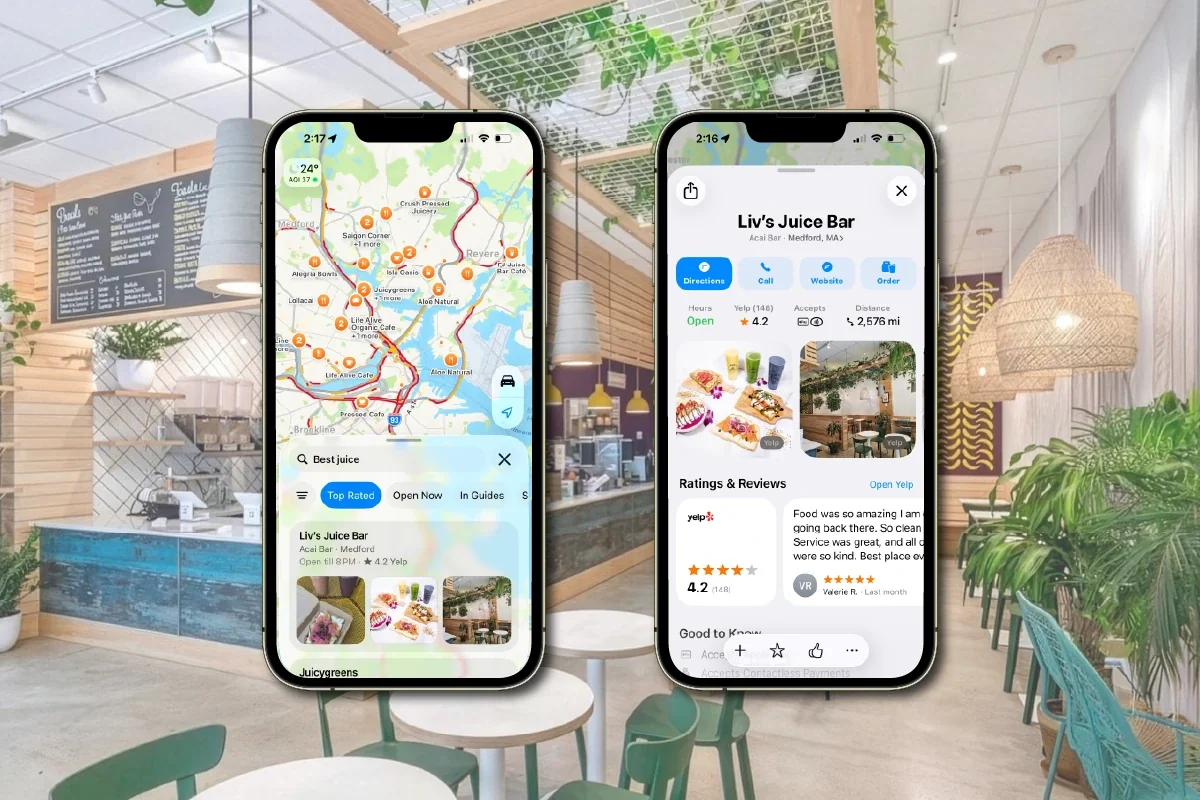
Search Behavior Has Shifted Toward “Right Now” Intent
Most restaurant searches today signal immediate action, which makes hours, menus, and accuracy more important than broad branding.
"Food near me" searches exploded 99% year-over-year. But here's what really matters: "food near me open now" jumped 875% [5]. That's diners making real-time decisions, not browsing for next week. Your business hours better be accurate, because incorrect information kills conversion at the moment it matters most.
Hyperlocal intent is driving the shift. Searches increased 900% in two years [6], while mobile devices now handle 60% of restaurant searches [6]. These aren't casual browsers, 84% of consumers search daily for local businesses, with 60% clicking on AI-generated overviews [7].
Voice search adds another layer. 72% of digital assistant users rely on voice capabilities [8], but the queries sound different. Instead of typing "pizza near me," they ask, "Where can I find the best pizza in the area?" [8] Longer, conversational, specific.
Then there's language diversity. Multilingual optimization matters more as "restaurants cerca de mí" becomes a breakout search term [5]. Your local market might be searching in Spanish, and if your SEO doesn't account for that, you're missing orders.
These patterns indicate:
• diners search close to me
• diners search open now
• diners search from mobile
• diners expect instant answers
Profiles that provide complete, structured information capture more of this demand.
Adapt to how diners actually search, or watch them find your competitors instead.
Common GBP mistakes that suppress rankings
• wrong primary category
• outdated hours
• old menu URLs
• duplicate listings
• mismatched NAP
• third-party ordering links unintentionally prioritized
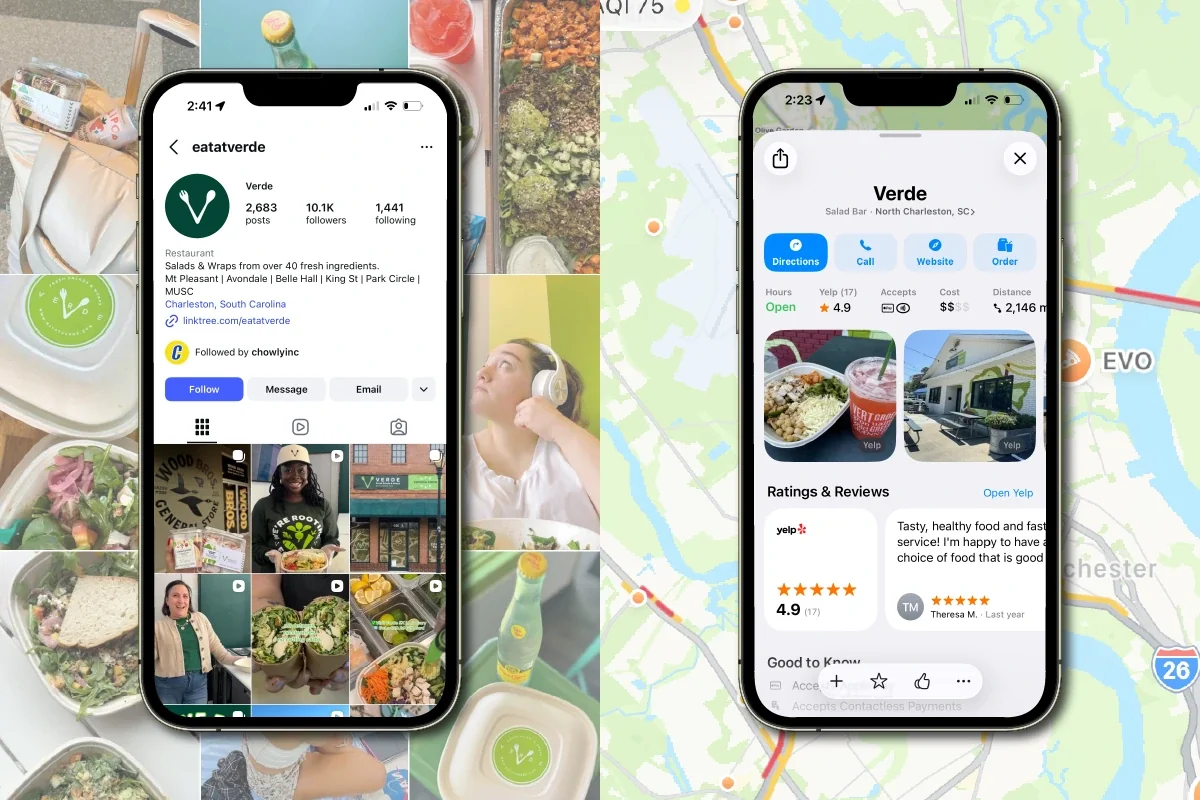
Your Google Business Profile Drives Actions That Correlate With Revenue
Complete profiles generate more clicks, calls, and directions than incomplete ones.
Your Google Business Profile is a primary driver of Search and Maps visibility. The difference between an optimized and incomplete profile? That's the gap between busy nights and wondering where your customers went.
Here's what complete actually means:
Essential Profile Elements:
• Business hours (including holiday schedules)
• Service options clearly marked (takeout, delivery, dine-in)
• Detailed business description with your specific cuisine type
• Direct menu links and reservation system integration
• Accessibility attributes (wheelchair access, outdoor seating, parking)
Visual Content That Converts: Upload 20-30 professional images covering your food, interior, exterior, and team [9]. Diners decide with their eyes first, give them something worth choosing.
Schema Markup for Search Engines: Restaurant schema markup tells Google exactly what you serve, when you're open, and what it costs. Websites using this structured data see up to 30% higher click-through rates [9]. Include your restaurant name, operating hours, menu items, pricing, and precise location data.
Schema Markup Quick Setup
• If on WordPress: use an SEO plugin + LocalBusiness/Restaurant schema
• If on Squarespace/Wix: confirm the platform outputs Restaurant/LocalBusiness structured data; add Menu schema via embedded JSON-LD if needed
• Validate with Google Rich Results Test
• Re-test after menu or theme changes
Weekly Activity Posts: Post 3-5 updates weekly, timing them for peak hunger hours [9]. Feature daily specials, seasonal menus, or limited-time offers. Google rewards active profiles with better visibility.
Social Media Integration: Google now allows direct social media linking within your profile [10]. Connect Instagram, Facebook, and TikTok to show the full picture of your brand and community.
Review Keyword Strategy: Guide satisfied customers to mention key terms in their reviews. When reviews include your target keywords, Google recognizes your authority for those search terms [9].
The goal is profile completeness. Empty fields reduce conversion. Every empty field is a missed opportunity to connect with hungry diners already searching in your area.
Local Authority Improves Visibility Over Time
Restaurants with strong local signals and backlinks earn higher trust and sustained discovery.
Content marketing for restaurants is about positioning your restaurant as the local dining authority that search engines, and hungry diners, trust first.
Local authority starts with community connection. Search engines reward restaurants that demonstrate genuine ties to their neighborhood. When you create location-specific content like supplier spotlights, neighborhood guides, or local event coverage [11], you're not just filling a content calendar, you're proving to Google that you belong in local search results.
The payoff shows up in backlinks and rankings. Quality backlinks from trusted local sources enhance your visibility, with the most valuable links coming from real community relationships [9]. These aren't links you can buy or fake, they come from authentic engagement.
Here's what works:
• Partner with food bloggers and local media covering your seasonal menu launches
• Submit press releases about community events you're hosting
• Create neighborhood guides that other local businesses want to link to
• Participate in community events that generate media coverage [9]
Restaurant schema markup takes this strategy further by helping search engines understand your menu items, prices, and nutritional information [12]. This structured data enables Google to display rich snippets directly in search results, increasing click-through rates by up to 30% [13]. When someone searches for "best pasta downtown," your restaurant can appear with menu items and prices right in the search results.
For restaurants serving multilingual communities, translation services make your content accessible to international diners [14]. Mobile optimization remains critical since most restaurant searches happen on smartphones, requiring responsive design with large, tappable buttons [15].
Real local authority comes from authentic community engagement, hosting events, showcasing local talent, and highlighting the suppliers who make your dishes exceptional [16]. This approach builds local relevance signals that support rankings and repeat visits. It's building the kind of community presence that turns online searches into loyal customers.
Two Ways Operators Run GBP Optimization
| Approach | What happens | Risk | Best for | |
| Checklist-only | Manual updates across links, menus, posts, reviews | Drift over time, inconsistent reporting | Single location with spare time | |
| System approach | Centralized control of links, menus, tracking | Requires setup ownership | Multi-channel or multi-location operators | |
Operators who prefer centralized control often use the Chowly Platform to manage their Google Business Profile.
GBP KPI Tracker (weekly)
| Metric | Why it matters | |
| Views | Measures discovery | |
| Website clicks | Indicates intent and ordering interest | |
| Calls | High-intent actions | |
| Directions | In-person visit signal | |
| Messages | Pre-purchase questions | |
| Photo views | Visual performance indicator | |
Operators who want to centralize ordering links, menu updates, and reporting often use a unified platform like the Chowly Platform to manage their Google Business Profile, online ordering, and marketing tools in one place [19].
Conclusion
Restaurant SEO is about connecting hungry diners with great food.
The operators who win understand this simple truth: when someone searches for dinner tonight, you want to be the first name they see. Everything else in this guide, optimized profiles, local content, search behavior adaptation, serves that single goal.
Your competitors are still figuring out why their phones aren't ringing. They're stuck treating SEO as something their nephew handles or a box to check once a year. Meanwhile, restaurants that implement these strategies systematically capture more of the search traffic that drives real revenue.
The difference shows up in filled tables, not just website analytics.
Google rewards restaurants that demonstrate local authority and provide complete, accurate information. When you post regularly, engage authentically with your community, and maintain detailed profiles, search engines recognize you as the kind of establishment people actually want to find.
Search behaviors will keep evolving, voice queries, AI overviews, new platforms. But the fundamentals remain: be visible where your customers are looking, provide the information they need to choose you, and make it easy for them to become repeat guests.
The restaurant industry gets more competitive every month. The operators who master their digital storefront while their competitors are still catching up gain share in local search.
Customers are searching daily. Rankings determine which restaurants get the click and the visit.
Key Takeaways
Master these essential restaurant SEO strategies to dominate local search and drive more diners to your establishment in 2026:
• Optimize for mobile and voice search: 60% of restaurant searches happen on mobile devices, with voice queries becoming increasingly conversational and location-specific.
• Complete your Google Business Profile thoroughly: Restaurants with optimized profiles receive 42% more direction requests and 35% more website clicks than incomplete profiles.
• Post regular updates and high-quality visuals: Upload 20-30 professional images and share 3-5 weekly Google Posts to demonstrate activity and attract hungry customers.
• Implement restaurant schema markup: Structured data increases click-through rates by up to 30% by helping Google display rich snippets with menu items and pricing.
• Create locally-focused content: Build community authority through neighborhood guides, local supplier spotlights, and event coverage to earn valuable backlinks and establish trust.
• Adapt to multilingual search trends: "Restaurants cerca de mí" has emerged as a breakout search term, highlighting the importance of serving diverse local communities.
Restaurant SEO success in 2026 depends on combining technical optimization with authentic community engagement. When you maintain accurate business information, create compelling local content, and adapt to evolving search behaviors, you transform online visibility into real revenue growth.
See What Chowly Can Do for Your Restaurant
Get Free DemoRelated Articles

The 10 Best Restaurant Online Ordering Systems (2026)
The 10 best restaurant online ordering systems for 2026, compared — real published pricing, per-order fees, honest pros and cons, and best-fit picks.

Best Restaurant Management Software for Restaurants (2026)
The 12 best restaurant management software tools for 2026, organized by category — with real starting prices sourced June 2026 and honest best-fit picks.

Toast vs Square for Restaurants: Which POS Wins in 2026?
Toast vs Square, settled by use case. Official June 2026 pricing, processing rates, hardware, and contracts — and why Chowly runs on top of either POS.