67% of restaurant operators spend more than 100 hours per year processing payroll manually [1].
That's nearly three weeks of lost productivity, time that could be spent on guest experiences, staff development, or business growth. But payroll is just one piece of a much larger problem.
The data reveals the scope: 31% of restaurants still manually enter employee hours into payroll systems, while 32% track time on paper [1]. These outdated methods create accuracy problems and compliance risks that drain resources daily. 26% of operators cite payroll mistakes and corrections as a major source of staff frustration [1].
Despite these challenges, nearly half of restaurant operators (46%) still rely on basic tools and manual oversight for labor law compliance [1].
Purpose-built restaurant software changes this equation entirely.
Operators save up to 10 hours monthly on scheduling alone [2] while keeping teams engaged and labor costs controlled. Restaurants generating $1 million annually add $2,000 to their monthly bottom line after switching from basic scheduling to dedicated restaurant systems [3].
The transformation isn't theoretical, it's measurable.
This guide examines where restaurants lose the most time, what software actually replaces, and how the right POS systems deliver specific time savings across every department. You'll see the exact features that create those 100+ hours of annual savings and real examples of operators reclaiming valuable time for what matters most: running profitable restaurants.
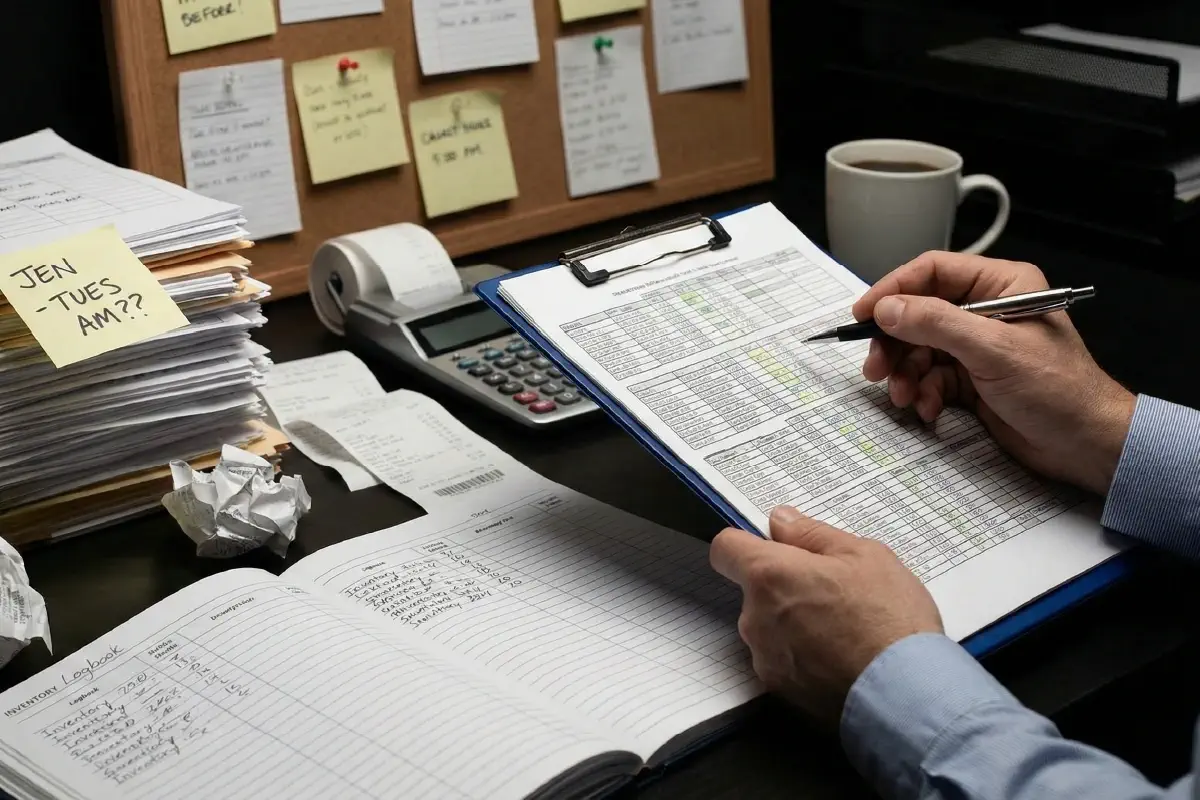
Restaurant operators know the feeling: drowning in time-consuming tasks that pull focus from guests and growth.
The time theft happens everywhere. Scheduling chaos, payroll corrections, inventory guesswork, and communication breakdowns create a cycle that keeps managers buried in administrative work instead of building their business.
Weekly schedule creation eats 5–10 hours every week [4].
But the real damage goes deeper. Unpredictable schedules and last-minute changes don't just frustrate employees, they hurt performance. Research shows servers upsell less and customer interactions suffer when staff face unexpected shift changes [5].
38% of restaurant shifts are improperly staffed in any given week [6]. Too many staff kills margins. Too few staff kills service. Either way, the operation suffers.
Payroll mistakes cost restaurants an average of $291 per error [7].
Yet operators continue wrestling with manual systems that create these costly mistakes. Restaurants with irregular schedules, split shifts, and tip management face particularly complex payroll challenges. 70% of employers struggle with Fair Labor Standards Act compliance [7], creating serious legal exposure.
Manual reconciliation of different pay rates, servers working lunch shifts at $15/hour, then dinner shifts with tip credits, consumes hours that could improve guest experiences [8].
Restaurants lose up to 10% of food inventory due to poor tracking and spoilage [9].
Clipboards, spreadsheets, and manual counting are so time-intensive that many operators complete inventory monthly or quarterly [10]. This infrequent tracking makes it impossible to identify waste patterns or catch theft early.
Without real-time systems, restaurants over-order supplies or run short of key ingredients [9], both scenarios that damage already thin profit margins.
62% of restaurant workers report regular miscommunication between front and back-of-house about customer orders [11].
The problem runs deeper: 72.25% of workers identify inefficient communication as the main source of team tension [11]. Last-minute order changes, the top operational challenge for 55.75% of staff, create a cascade of problems: service delays (60.5%), team frustration (55.5%), and increased errors (48.75%) [11].
Pre-shift meetings and sticky notes can't bridge these critical gaps [12]. The solution requires technology that connects teams in real time.
"Restaurant365 is the greatest software I've ever worked with. It closes the gap between accounting and operations, giving us real-time insights."
— Cody Wong, Chief Financial Officer, SDC Restaurants, LLC - restaurant operations expert
Restaurant software doesn't just add features, it eliminates the outdated systems that drain your productivity. The shift toward integrated platforms represents a fundamental change in how operators reclaim valuable time.
Walk into most restaurants, and you'll find managers hunched over spreadsheets, manually creating schedules that consume 20% of their time annually [13]. Restaurant scheduling software changes this entirely.
Automated schedule creation replaces the guesswork. Mobile access means your staff gets immediate notifications about changes directly on their phones, ending the confusion and miscommunication that paper systems create [13].
No more printouts taped to office walls. No more "Did you see the new schedule?" conversations.
Traditional punch cards create administrative nightmares. "Buddy punching", where one employee clocks in for another, becomes impossible with biometric verification systems [14].
Instead of hours spent calculating payroll from physical cards, integrated systems handle attendance tracking, breaks, overtime calculations, and time-off management automatically [15]. The math happens in the background while you focus on operations.
Replace chaotic messaging with structured communication platforms. Features like Roster Talk let you create focused group messages filtered by shift, location, department, and role [16].
Announcements can include photos, videos, and PDFs, ensuring critical updates reach everyone instantly [16]. No more hoping your prep cook saw the sticky note about tomorrow's special.
Predictive analytics replaces instinct-based staffing decisions [17]. These AI-powered systems analyze your historical sales data, morning rush, midday lull, evening surge, to highlight inefficiencies and align staffing with actual business needs [17].
The result: precise labor allocation based on data, not hunches.
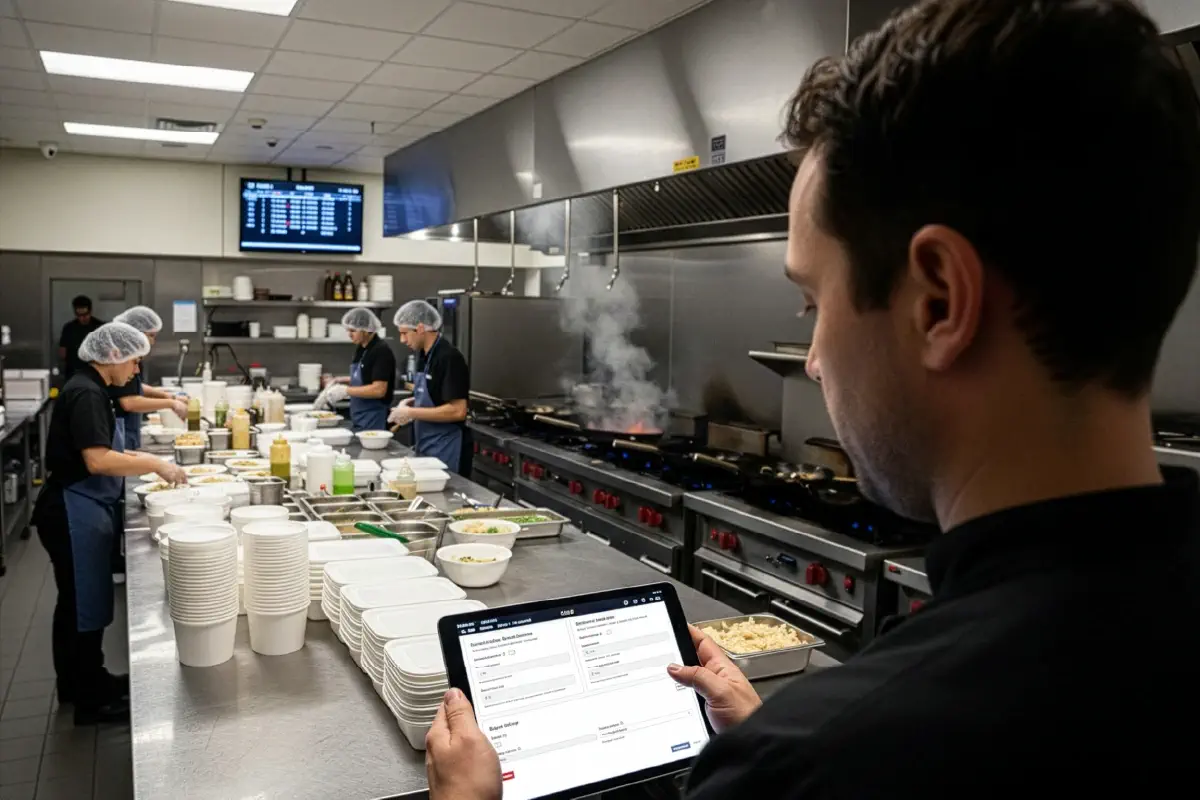
Restaurant software doesn't just solve isolated problems, it transforms entire departmental workflows. Each area of your operation benefits from specialized tools designed to eliminate time-wasting tasks and redirect focus toward guests and growth.
AI-powered restaurant technology handles reservations, guest preferences, and waitlists without staff intervention [18]. The financial impact is substantial: this technology generates an additional $3,000 to $18,000 per month per location, up to 25 times its cost [18].
Tablet-based order management systems consolidate all orders, direct and third-party, into single screens, cutting miscommunication dramatically [19]. QR code ordering allows guests to view menus, place orders, and pay from their phones, boosting staff efficiency and table turnover [19].
The result: servers spend more time creating experiences, less time managing logistics.
Kitchen display systems have replaced traditional ticket rails, keeping kitchens organized and reducing errors [20]. These systems connect directly to your POS, ensuring orders flow seamlessly from front to back [20].
Inventory management software tracks everything from deliveries to plate usage, preventing the 10% food inventory loss many restaurants experience [21]. Automated stock level monitoring enables chefs to prep smarter based on historical sales data [20], turning guesswork into precision.
Digital dashboards provide real-time visibility into critical metrics like food cost percentage and labor costs across locations [22]. Instead of discovering problems weeks later through reports, operators see issues developing and course-correct immediately [23].
Felipe's Mexican Taqueria exemplifies this transformation, gaining clarity and control across five locations after implementing all-in-one management software [23].
Managers spend less time buried in spreadsheets, more time leading teams.
70% of employers struggle with Fair Labor Standards Act compliance [24]. Restaurant-specific payroll systems automate wage calculations, deductions, and tax withholdings, eliminating the $291 average cost per payroll error [24].
HR software streamlines hiring, training, and scheduling across franchise locations [25]. Mobile-friendly employee portals provide secure access to benefits and company information [25]. Professional employer organization (PEO) services deliver 27.2% ROI in cost savings alone [24].
The transformation is measurable: less administrative burden, more strategic focus.
The wrong restaurant software choice costs more than money, it costs time, team frustration, and operational efficiency.
Smart operators focus on systems built specifically for restaurant operations, not generic business tools retrofitted for food service.
Most operators shop for “POS features,” but time loss rarely comes from the register.
It comes from everything around it: re-entering marketplace orders, updating menus in five places, reconciling reports, fixing payroll mistakes, chasing staff over text, or stitching data together in spreadsheets.
If your goal is to reclaim 100+ hours per year, prioritize systems that eliminate duplicate work, not just process payments.
Look for:
• One platform or tight integration layer that reduces manual entry
• Unified reporting across sales, labor, and off-premise orders
• Direct ordering that captures guest data you actually own
• Built-in marketing tools (email/SMS) so retention isn’t another tool to manage
• Menu sync across channels to prevent update whiplash
• Automation for scheduling, payroll, and compliance
The best restaurant software removes tasks entirely. If you still need spreadsheets, exports, or copy-paste workflows, the system isn’t saving you time.
Restaurant-specific features matter more than flashy interfaces. Your system needs menu management, inventory tracking, and kitchen integration, not generic retail functions [26]. User-friendly design keeps your team moving during rush periods instead of fumbling with complicated screens [26].
The essentials: recipe management, meal customization, and table management capabilities that handle restaurant complexity [26].
| If your biggest time drain is… | Prioritize… | Best-fit software type |
|---|---|---|
| Third-party order chaos + reconciliation | Order consolidation + menu sync + first-party growth | Off-premise platform (Chowly-style) |
| Scheduling + labor misalignment | Forecasting + templates + mobile swaps | Labor management |
| Inventory variance + waste | Real-time usage + variance reports | Inventory/BOH |
| Payroll errors + compliance | Automated wage/tip rules + alerts | Payroll/HR |
Time to move beyond Excel when your current setup delivers outdated or incomplete data [27].
Red flags include:
• Tracking inventory with pen and paper
• Fighting with generic accounting software that can't handle tips and food costs
• Spending hours on tasks that should take minutes [27]
Growing operations especially need systems that scale, Excel breaks down as you add locations, menu items, and staff [28].
“Restaurant software” isn’t one category. It covers POS, scheduling, payroll, inventory, and off-premise ordering.
The fastest path to saving time is identifying where you personally lose it first [29].
If third-party order chaos is the problem
Manual reconciliation, menu updates across apps, missed tickets, and reporting gaps typically consume the most hours.
This is where an off-premise platform that consolidates ordering channels and grows first-party sales has the biggest impact.
If scheduling is the problem
Labor tools that automate templates, swaps, and forecasting usually deliver immediate wins.
If inventory is the problem
Real-time usage tracking and variance alerts prevent waste and reduce counting time.
If payroll is the problem
Integrated time tracking and automated wage rules eliminate costly rework.
Choosing software based on your biggest bottleneck saves more time than choosing the most popular brand name.
For many independent restaurant operators, the biggest time leak isn’t scheduling or payroll. It’s off-premise.
Marketplace orders, direct orders, delivery apps, and websites often live in separate systems. Teams manually re-enter tickets, update menus in multiple places, and spend hours reconciling reports that should match but don’t [30].
That’s exactly what the Chowly Platform was built to solve: eliminating manual order entry, reconciliation, and reporting across every off-premise channel.
The Chowly Platform helps operators:
• Consolidate third-party and direct orders into one workflow
• Keep menus, pricing, and availability synced automatically
• Capture guest data through first-party ordering
• Run email and SMS marketing without adding extra tools
• Track performance in one place instead of across spreadsheets
• Protect margins by shifting orders away from high-fee marketplaces
Instead of stacking four or five disconnected tools together, operators manage ordering, marketing, and guest relationships in one system.
The impact shows up quickly.
In recent Chowly customer case studies:
• Two Eggs! eliminated third-party reliance, saved $64,000 annually in marketplace commissions, increased direct orders by 53%, and lifted average ticket size by 11% after moving to first-party ordering [55].
• Operators using Chowly’s first-party ordering and marketing tools report higher-margin direct sales, fewer manual reconciliations, and measurable time savings from automated menu sync and reporting [56].
• Restaurants shifting volume away from marketplaces typically see 15–30% fee savings per order, creating the margin room that makes marketing and loyalty sustainable [57].
The practical result is less manual work, fewer errors, and hours returned every week.
For operators where off-premise represents 30–50% of revenue, this category alone often produces the largest time savings of any software investment.
Restaurant time drains happen quietly, often invisible until hundreds of hours have vanished.
These operational inefficiencies compound daily, stealing productivity from teams already stretched thin. The costs show up in frustrated staff, missed opportunities, and management burnout that could be entirely avoided.
Restaurant managers spend an average of 2.64 hours every week creating employee schedules, about 6.61% of their work week vanished [31]. Those using spreadsheets fare worse, consuming 3.14 hours weekly (7.86% of their work week) [31].
Over a year, this scheduling inefficiency alone costs your management team more than 135 hours of productive time.
That's time that could be spent coaching servers, developing menus, or building guest relationships.
Payroll mistakes create cascading problems that extend far beyond the initial error. Approximately 94% of business spreadsheets contain critical errors [32], leading to incorrect payments that frustrate employees and damage morale.
Each error requires investigation, correction, and communication, tasks that pull staff away from serving guests. The ripple effects multiply: confused employees, delayed corrections, and managers spending hours fixing what automated systems prevent entirely.
Managing time-off requests manually becomes a daily struggle [33]. Verbal approvals get forgotten, paper requests disappear, and text message chains create confusion across shifts.
Managers end up mediating between staff members competing for popular days off, adding administrative burden to already packed schedules. The chaos intensifies during holidays and peak seasons when time-off requests surge.
Fragmented technology forces staff to manually enter data across multiple platforms, wasting 5–10 hours weekly [34]. The problem multiplies across locations as teams struggle with third-party order entry, delivery mismatches, and stitching together reports from different tools.
This operational friction diverts attention from what actually matters, creating exceptional guest experiences and growing profitable businesses.
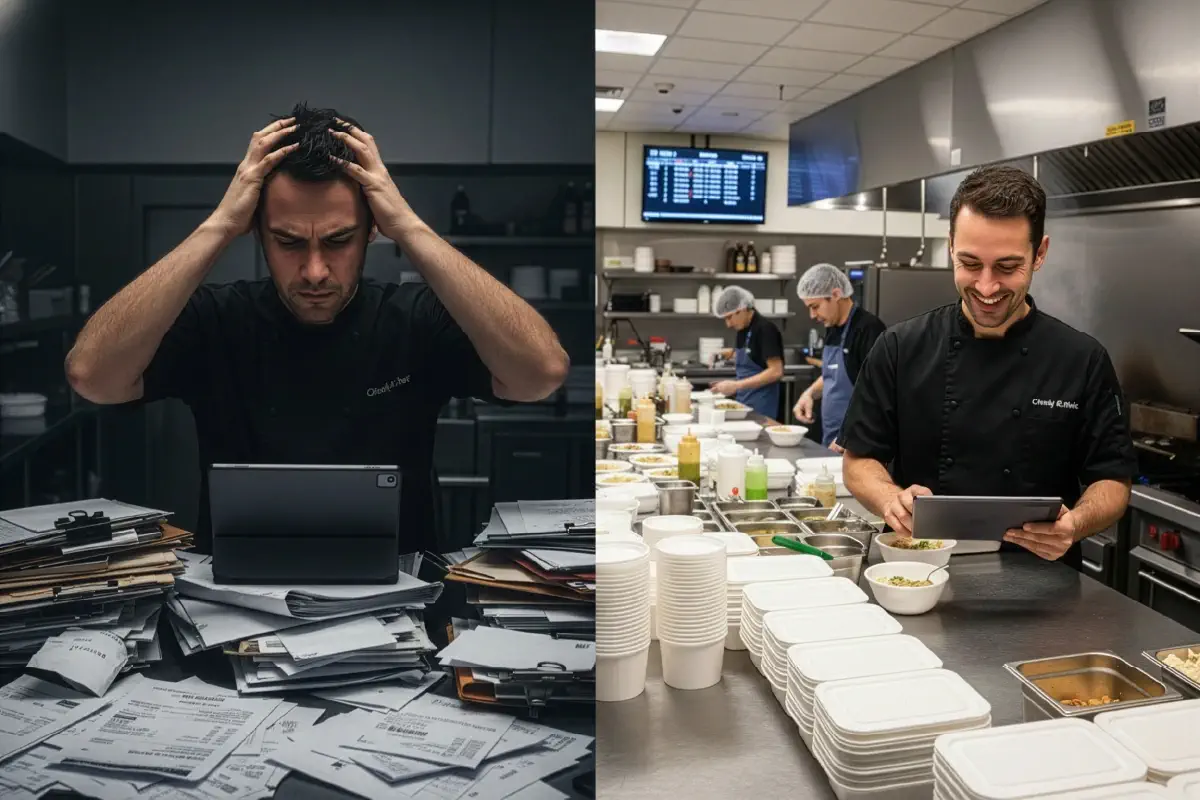
Restaurant operators waste hours on tasks that software handles in seconds. The right features don't just save time, they eliminate the administrative chaos that keeps you from running profitable restaurants.
Smart templates reduce the 5-10 hours managers typically spend creating weekly schedules [35]. These systems match business needs with employee skills 96% of the time [35], instantly creating schedules that guarantee hours to new staff or assign specialists to specific roles, like ensuring your best server handles the children's birthday party rush [35].
The result: scheduling that works the first time, every time.
94% of business spreadsheets contain critical errors [35]. Integrated systems eliminate those mistakes by automatically tracking hours, calculating overtime, and processing payroll without manual intervention, saving restaurants the average $291 per payroll error [36].
Labor data flows directly from clock-in to paycheck, with break enforcement and compliance built in [37]. No more duplicate data entry. No more payroll corrections that eat up manager time.
Digital shift management puts schedule control in your team's hands. Staff view schedules, request time off, and propose trades through mobile apps [38]. Built-in approval workflows keep managers in control without making them bottlenecks.
This cuts team messages by 50% [37], no more text chains about coverage or sticky note requests that get lost.
Dashboard views show exactly how scheduling decisions impact labor costs. Systems calculate premiums, flag unplanned activity, and update every 15-60 minutes with forecasted versus actual labor data [39].
Managers make informed decisions about breaks, cuts, and call-ins based on current sales performance, not guesswork.
Restaurant POS systems now collect analytics for accurate forecasting without manual calculations [40]. This integration delivers:
• Sales projections based on historical data
• Hourly staffing requirements tied to demand
• Inventory purchasing optimized for predicted volume
Track sales alongside weather and events to prepare for outlier periods [40]. Plan smarter, not harder.
Labor law compliance challenges 70% of restaurant operators, especially where Fair Workweek laws exist [41]. Modern software enforces compliance rules automatically across scheduling and time tracking, calculating premiums and flagging issues before they become problems [41].
Start here exploring compliance solutions that protect your business with built-in safeguards.
Purpose-built communication tools eliminate phone number swapping and external group chats [42]. Managers send real-time messages to individuals, departments, or entire teams through dedicated apps [42].
Automated reminders for shifts and breaks enhance accountability [42]. Sticky notes and verbal instructions become obsolete.
Modern tip management calculates complex tip pools in seconds using real-time POS data [43]. Automated policies deliver instant, cashless payouts directly to employee bank accounts, creating a 95% reduction in tip distribution time [43].
Integrated inventory systems track deliveries to plate usage, preventing the 10% food inventory loss restaurants experience without proper tracking. Every ingredient accounted for, every dollar protected.
These features work together to eliminate the manual tasks that drain restaurant profitability. The question isn't whether software saves time, it's which features will create the biggest impact for your operation.
Results matter more than promises. These operators made the switch and measured the impact.
Chef Kevin Yu transformed payroll operations through integrated software. The difference was immediate.
"Payroll takes roughly about 20 to 25 minutes for me every week," Kevin explains. Previously? "3 to 5 hours a week" [44] of manual work eliminated. The restaurant's tip pooling system adds more efficiency, "saving a solid 3 to 4 hours per payroll" [44].
Employee onboarding improved too. The streamlined process "saves managers at least 35 to 40 minutes per employee" [44].
Josh Bishop consolidated four separate applications into one platform at Wildfire and Fork & Fire. The financial impact was measurable.
"Labor is the biggest area that we've improved. I would give 80% of that credit to 7shifts," Josh states [45]. Labor costs dropped approximately 20% [46] after implementation.
Payroll processing time? Cut by 70%, saving 105 minutes each payday [46].
Miami's upscale Juvia restaurant faced a weekly scheduling burden: 7 hours of manual schedule creation. Software changed that equation.
Schedule creation time: 1-2 hours. That's a 70% reduction [47].
Shift swaps had been their "biggest pain point" in Miami's transient restaurant industry [47]. The system solved it, freeing managers to focus on guest experience instead of administrative chaos.
Jason Wang cut scheduling time in half [48] at Xi'an Famous Foods in New York City. But the real win was employee satisfaction.
"One of the biggest hurdles in this industry is the work-life balance of employees," explains Jason. "The biggest cause of turnover we hear is no flexibility in scheduling. 7shifts has allowed us to make better planning easier" [48].
The system addressed their primary retention challenge directly.
"It helps different teams work together to solve problems. If one restaurant is having discussions as to why their food costs were so high, each team can go into the MarketMan platform and see why."
— Brian Scott, Owner, Taco Del Mar - multi-location restaurant chain operator
Fragmented restaurant technology creates costly inefficiencies that integrated systems eliminate. Restaurant operators using disconnected tools spend 30% more time on administrative tasks [49] because of redundant data entry across multiple platforms.
That extra time adds up fast.
Unified restaurant platforms slash input mistakes by automating data transfer between systems. Every time staff manually enters the same information multiple times, each keystroke creates error potential. Integrated systems reduce order errors by up to 95% [50], a dramatic improvement over the error-prone manual processes most restaurants still use.
Single-login platforms streamline workflows, letting your team access all functions without juggling multiple passwords or interfaces.
Menu updates made in one place automatically propagate throughout all digital channels [51]. Orders flow directly from your POS to kitchen displays, inventory tracking, and financial reports without staff intervention [52]. This seamless connection between your POS and accounting, inventory, and labor systems creates operational efficiency impossible with disconnected tools.
No more updating each system separately.
Restaurant managers spend countless hours reconciling data discrepancies between systems. Integrated platforms eliminate this wasted effort by maintaining data consistency across all touchpoints. Managers can focus on customer service instead of fixing technical issues or explaining report discrepancies [50].
Operational clarity lets your management team address actual business challenges rather than software problems.
A restaurant KPI dashboard brings critical metrics together in one view, giving you instant insight without switching between systems [53]. Unified dashboards display sales alongside labor and food costs [52], enabling data-driven decisions based on complete information rather than partial insights.
These comprehensive views transform decision-making from reactive to proactive by revealing trends across all aspects of your operation in real time [54].
Restaurant operators face a choice: continue losing 100+ hours annually to manual processes, or reclaim that time for what truly builds business value.
The evidence is clear. Specialized restaurant software doesn't just save time, it transforms how operators allocate their most precious resource. Instead of drowning in spreadsheets and administrative tasks, teams can focus on guest experiences, staff development, and sustainable growth.
Real operators have proven the transformation works. Chef Kevin Yu cut payroll processing from hours to minutes. Josh Bishop reduced labor costs by 20% while streamlining operations across multiple locations. Jason Wang improved employee retention by solving scheduling flexibility challenges. These aren't isolated success stories, they represent a fundamental shift in how smart restaurant operators approach technology.
The financial impact extends beyond time savings. Restaurants add $2,000 monthly to their bottom line through better scheduling alone. Eliminating payroll errors saves $291 per correction. Integrated systems reduce operational errors by up to 95%, creating compound savings across every department.
Restaurant technology has evolved to meet operators where they are. Single-location family restaurants and multi-unit chains alike now have access to purpose-built solutions that address their specific operational challenges. The systems exist, the question becomes implementation.
The choice isn't whether restaurant software delivers value. The data confirms it does, measurably and consistently. The real decision centers on which specific technologies will best serve your operation's unique needs and create the most significant time savings for your team.
Time remains your most valuable asset. Restaurant software simply gives you more of it to spend on building the business you envisioned, one focused on exceptional hospitality, profitable operations, and sustainable growth rather than endless administrative tasks.
Restaurant software delivers measurable time savings that directly impact your bottom line, with operators reclaiming 100+ hours annually through automation and streamlined processes.
• Manual operations drain 5-10 hours weekly on scheduling alone - Smart templates and automated systems reduce this to under 2 hours while improving accuracy.
• Integrated platforms eliminate 30% of administrative time by connecting POS, payroll, and inventory systems, preventing duplicate data entry across multiple tools.
• Real restaurants achieve 20% labor cost reductions - Case studies show operators like Wildfire cut costs significantly while reducing payroll processing time by 70%.
• Payroll errors cost $291 per mistake on average - Automated systems prevent the 94% error rate found in manual spreadsheets and ensure compliance.
• Mobile shift management cuts team communication by 50% - Staff handle schedule changes independently through apps, eliminating text chains and sticky notes.
The ROI is clear: restaurants generating $1 million annually can add $2,000 monthly to their bottom line by transitioning from basic systems to specialized restaurant software. The key lies in choosing integrated solutions that address your specific operational challenges rather than piecing together disconnected tools.