5 Proven Plays to Grow Profit (Without a Corporate Tech Team)

Running an independent restaurant today isn’t simple. Labor is tight, costs are rising, and third-party delivery fees keep eating into your margins. And yet, the operators who thrive aren’t the ones adding more tools or chasing every new trend—they’re the ones simplifying, owning their digital storefront, and focusing on profit.
This playbook lays out five proven strategies backed by industry research from Square and Nation’s Restaurant News, along with real-world results from thousands of restaurants on the Chowly Platform.
The result?
✓ More money in your pocket
✓ Guests who order directly from you (not a marketplace)
✓ Stronger, lasting relationships
And the best part—you don’t need 10 different tools or an IT team. Just one platform, a clear plan, and the discipline to execute.
Profitable Restaurant Playbook
| Strategy | Why It Matters | What To Do | |
| First-party ordering | Cuts third-party fees, builds guest data | Move guests to your own site | |
| Unified platforms | Simplifies tech, reduces errors | Centralize POS, loyalty, ordering | |
| Smart loyalty | Drives repeat visits, not discounts | Segment and personalize outreach | |
| Automation | Saves time, boosts ROT | Automate tasks across ops and marketing | |
| Profit-focused strategy | Margins > volume | Shift to first-party and smarter pricing | |
Play 1: Make First-Party Ordering Your Primary Growth Channel
Keep the margin, the data, and the guest relationship.
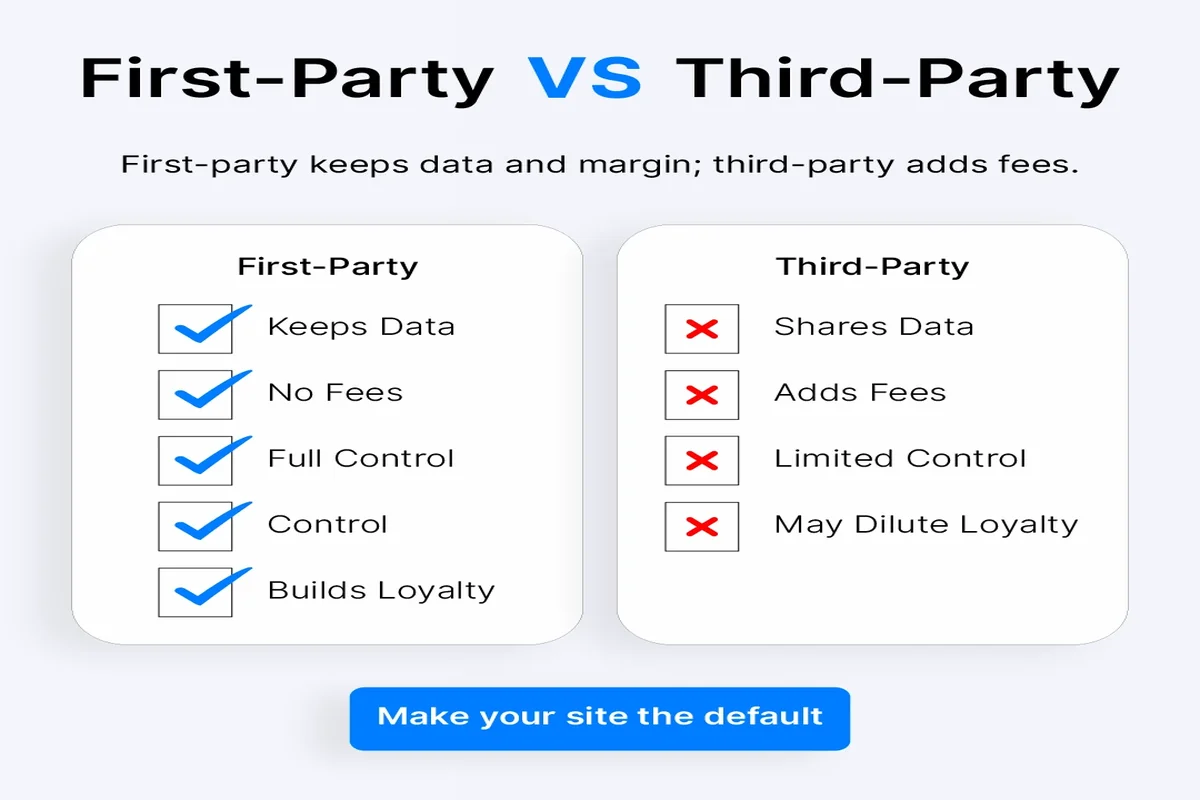
Every third-party order costs you 15–30% in fees—and you lose guest data in the process. When guests order directly on your site, you keep the profit, the data, and the chance to bring them back.
Why it matters:
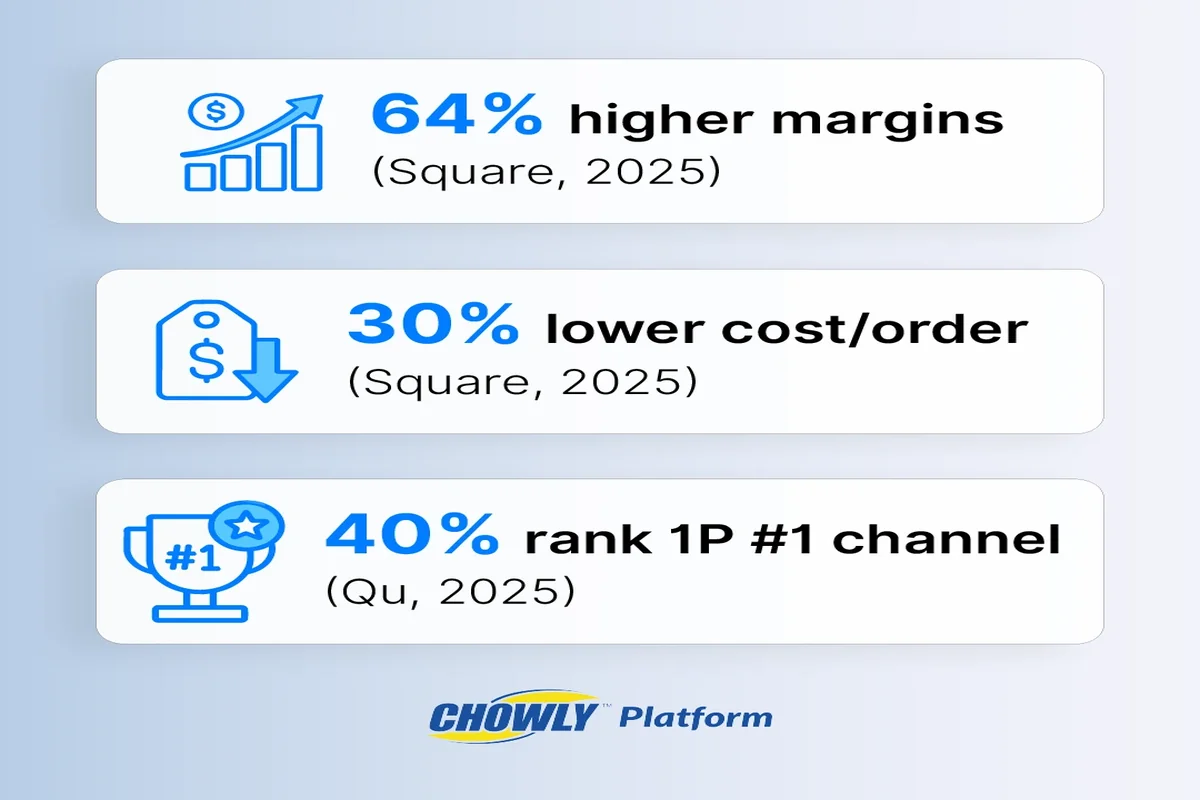
• First-party orders deliver** up to 64% higher profit margins and ~30% lower cost per order** compared to third-party.
• 40% of operators now call first-party their top growth channel.
• Once a diner orders directly three times, they’re **2–3x more likely **to stick with first-party.
Pro Tip: Add local landing pages like “Best Thai Takeout in [City]” and link them to your ordering platform. Google demand is free traffic—don’t hand it to third-party apps.
Feature Comparison: First-Party vs. Third-Party
| Feature | ✅ First-Party | ❌ Third-Party | |
| Guest Data Access | Yes | No | |
| Fees per Order | 0–10% | 15–30% | |
| Brand Experience Control | Full | Limited | |
| Custom Promotions | Flexible | Platform-Bound | |
| Loyalty Building | Ownable | Fragmented | |
Pro Tip: Don’t think you need to cut off third-party. Treat it as incremental—helpful for new reach—but build your default flow around first-party.
Play 2: Unify Your Restaurant Digital Storefront Tech Stack
One update, one system, one source of truth.
If you’re juggling separate logins for website, online ordering, ads, and marketplaces, you’re paying twice: once in subscription fees, and again in errors and wasted staff time.
Why it matters:
• 64% of operators consolidating tech stacks and 55% prioritizing centralized data orchestration—because fewer systems mean fewer mistakes.
• Operators report that menu updates, pricing, and 86s are more accurate when handled through a single POS-synced platform.
• Consolidation reduces “tool sprawl,” helping staff focus on service instead of switching logins.
Before vs After
| Challenge | ❌ Before | ✅ After | |
| Menu Changes | Manual updates in 5+ tools | One update syncs everywhere | |
| Promo Launches | Multi-platform chaos | One dashboard push | |
| Guest Data | Scattered & siloed | Centralized & actionable | |
| Staff Training | Multiple systems | One intuitive interface | |
What to do:
Map every live channel, cut duplicates, and route all “Order Online” entries to your site. Standardize third-party menus, then review one report weekly: ads → orders → profit.
Play 3: Smart Loyalty > Blanket Discounts
Drive repeat visits without training guests to wait for deals.
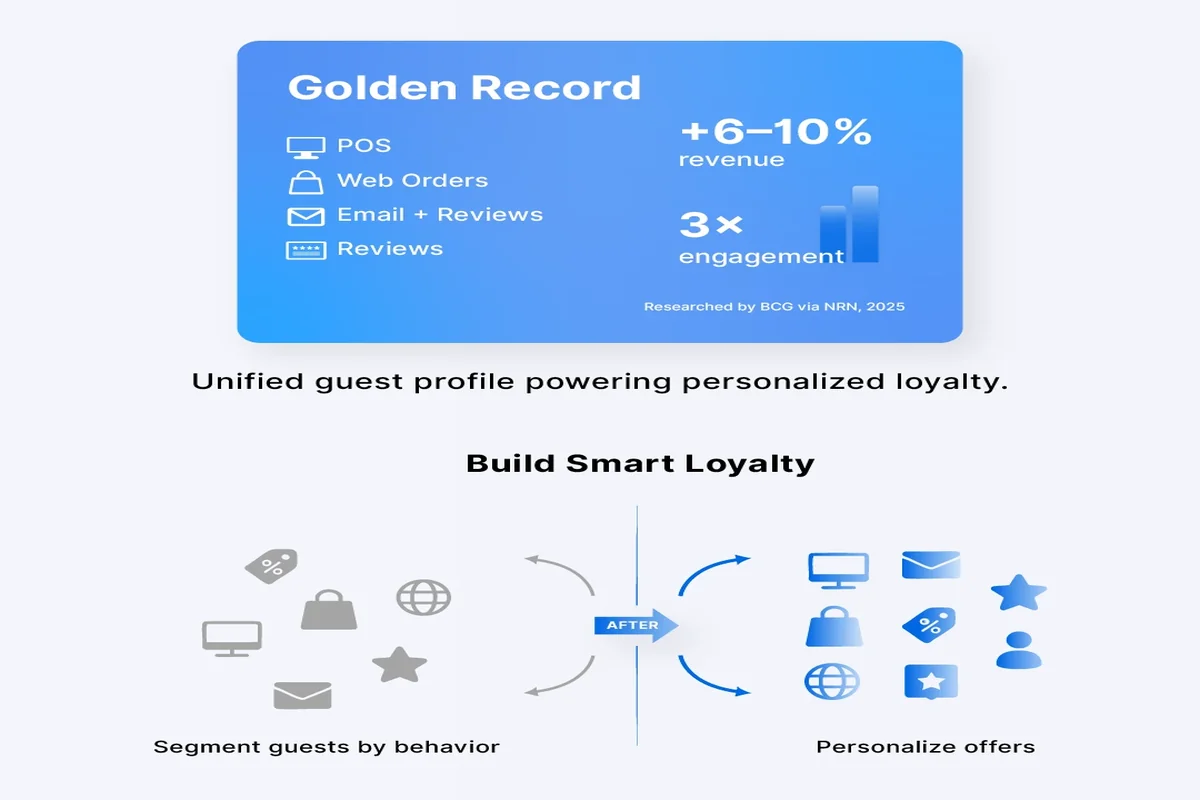
Generic discounts only train guests to wait for a coupon. Smart loyalty means using guest behavior—what they order, when they visit—to bring them back without slashing your margins.>
Why it matters:
• Behavior-based outreach can 3× engagement and lift revenue 6–10%.
• Loyalty spend fell 8% while CDP/analytics investment rose 11%—operators are moving from gimmicks to intelligence.
• Personalized loyalty is one of the top three growth levers for restaurants, even in tight spending environments.
What to do:
Segment guests into regulars, high-margin buyers, and lapsed visitors. Send relevant nudges: “Reorder your Tuesday bowl?” or “Try the new spicy add-on.” Protect margin by saving discounts for lapsed or new guests only.
“Restaurants that build a connected technology ecosystem that effectively centralizes and unifies their underlying data, integrating first-party channels, AI-driven insights, and operational tech, will gain a lasting competitive edge.”
Play 4: Automate for Return on Time (ROT)
Free up hours by letting the tech handle the busywork.
Time is your most limited resource. Automation doesn’t just save clicks—it saves hours each week that can go back to cooking, coaching, or growing.
**Why it matters: **
• 62% of operators using kiosks and smart kitchen tools saw ** up to 3x ROI in year one** from reduced prep, waste, and energy use.
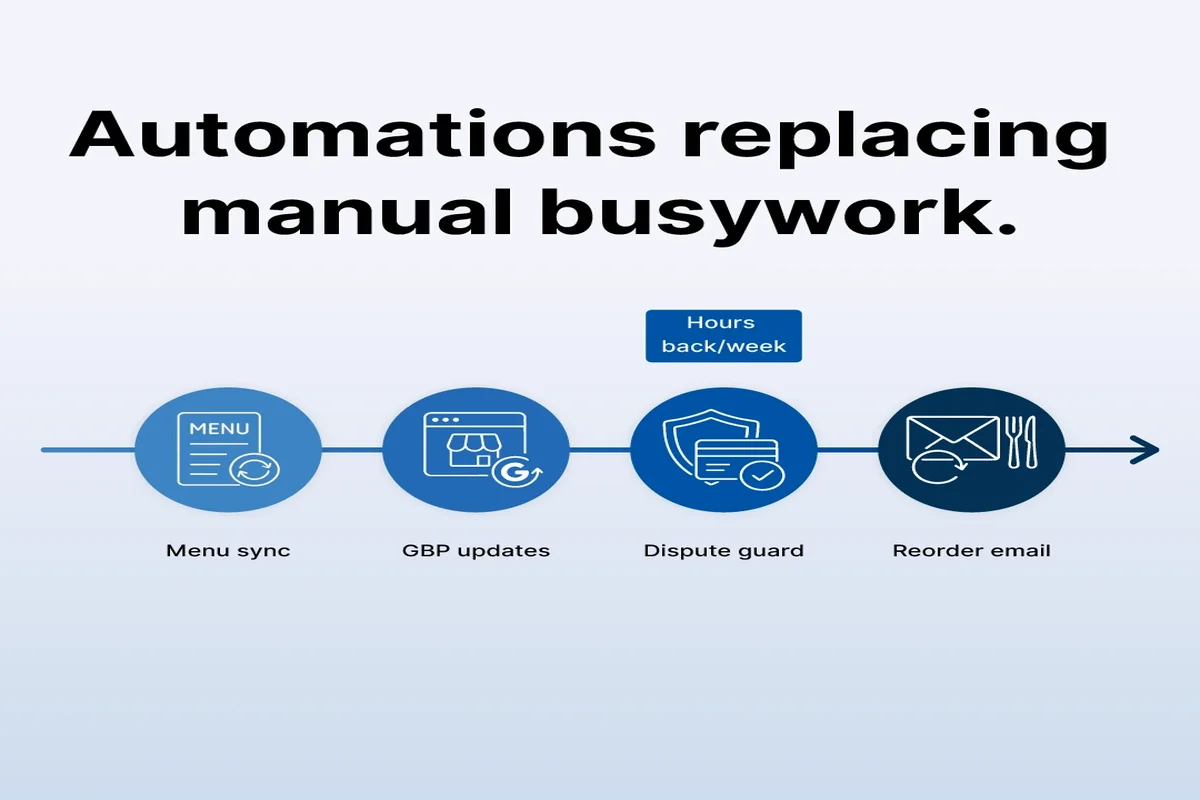
• Automations like menu syncs, dispute management, and lifecycle emails reduce operator workload by dozens of hours per month.
• Dispute + error guardrails: Auto-flag and fight 3P disputes (3–5× higher than 1P) and catch order errors before they cost you.
• Automation protects margins while keeping staff focused on service.
Examples: POS → site menu sync, auto-flagged disputes, lapsed-guest winback emails.
Measure it: Track hours saved/week, errors avoided, and incremental orders/hour gained. Small automations stacked together compound into major profit.
Play 5: Profitability > Volume
More orders don’t matter if you’re not making money on them.
More orders are meaningless if they come with low or negative margin. The operators who win are shifting focus from chasing volume to maximizing profit per order.
Why it matters :
• Digital sales growth has slowed to just +4% over three years—volume alone won’t save your P&L.
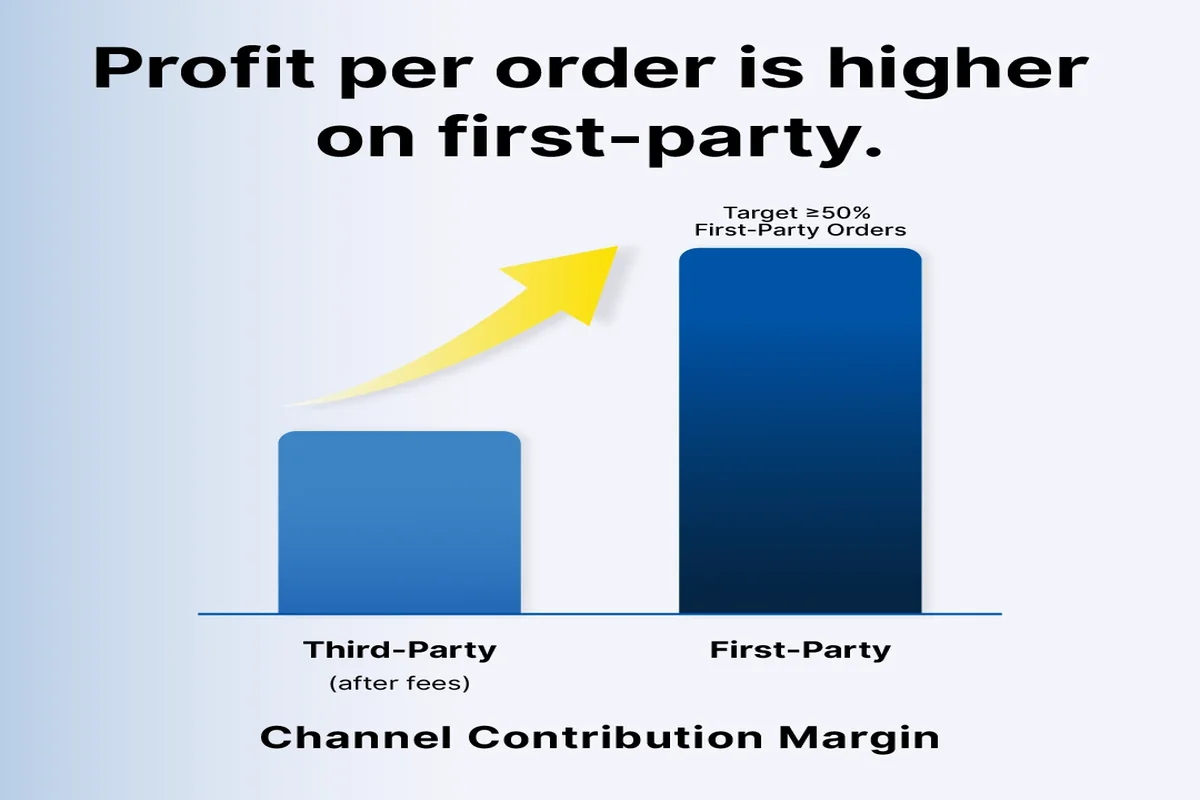
• First-party orders deliver 20–30% more profit per ticket than third-party.
• Case studies (Chowly + Two Eggs!) prove the model: $64K+ saved in fees and an 11% higher ticket size after moving to first-party.
What to do:
Make first-party your default. Use third-party incrementally with markups. Track contribution margin by channel. Lift ticket size with cross-sells and timed add-ons.
Why Waiting Costs You
Every month you delay, you’re:
• Losing 15–30% of orders to fees
• Handing away guest data you’ll never get back
• Burning staff time across disconnected tools
• Leaving money on the table with static pricing
Operators who don’t modernize risk flat margins and declining repeat business, while those who unify and own their digital storefront see sustainable growth.
| Area | ❌ Without Modernization | ✅ With a Platform | |
| Third-Party Fees | 15–30% per order | 0% | |
| Guest Data | None | Fully accessible | |
| Staff Load | Burnout | Streamlined | |
| Margins | Flat | Growing | |
Own the Channel. Own the Outcome.
The most profitable independent restaurants aren’t stacking new tools—they’re simplifying. The operators who win are unifying what matters:
• First-party ordering
• Google demand capture
• Smarter loyalty
• Automation that saves hours
Less chaos. More control. Better margins.
Want to see it in action? Book a quick demo and see how the Chowly Platform helps restaurants grow profit and own their digital storefront.
See What Chowly Can Do for Your Restaurant
Get Free DemoRelated Articles

The 10 Best Restaurant Online Ordering Systems (2026)
The 10 best restaurant online ordering systems for 2026, compared — real published pricing, per-order fees, honest pros and cons, and best-fit picks.

Best Restaurant Management Software for Restaurants (2026)
The 12 best restaurant management software tools for 2026, organized by category — with real starting prices sourced June 2026 and honest best-fit picks.

Toast vs Square for Restaurants: Which POS Wins in 2026?
Toast vs Square, settled by use case. Official June 2026 pricing, processing rates, hardware, and contracts — and why Chowly runs on top of either POS.