Restaurant owners publish content, run ads, and stay active across channels, then watch orders stay flat.
The mismatch usually comes from channel intent, ordering friction, and platform economics. This article breaks down the problems and shows what to measure and fix to drive profitable orders.
Visibility measures exposure. Intent measures readiness to order. Restaurant marketing performs better when spend and effort concentrate on high-intent moments and low-friction ordering paths.
Restaurant marketing often misses the mark because it mixes up visibility with purchase intent. Your social media posts might reach thousands of potential customers, but that doesn't mean they're ready to order food right then.
Let's see what happens when you scroll past a restaurant's post on Instagram. You might think "that looks delicious" or even double-tap to like it. Unless you're hungry and looking for food options, you just keep scrolling. That post got seen but didn't make anyone order.
These marketing metrics actually matter because they connect directly to orders and revenue:
• Direct online orders through your own website
• Order value increases from effective upselling
• Repeat customer rate showing loyalty
• Conversion rate from viewing your menu to completing an order
Restaurant owners often chase broad awareness instead of reaching customers right when they decide what to eat. A small group of hungry people ready to order brings more value than a huge audience with no immediate plans to buy food.
Reaching customers who want to buy means understanding their decision process. A hungry person usually:
1. Realizes they're hungry
2. Looks at available options
3. Compares a few choices
4. Makes a decision
5. Places an order
Your marketing needs to reach customers during steps 2-4, when they actively look at options. Marketing outside this window rarely leads to sales, whatever the impressions or likes show.
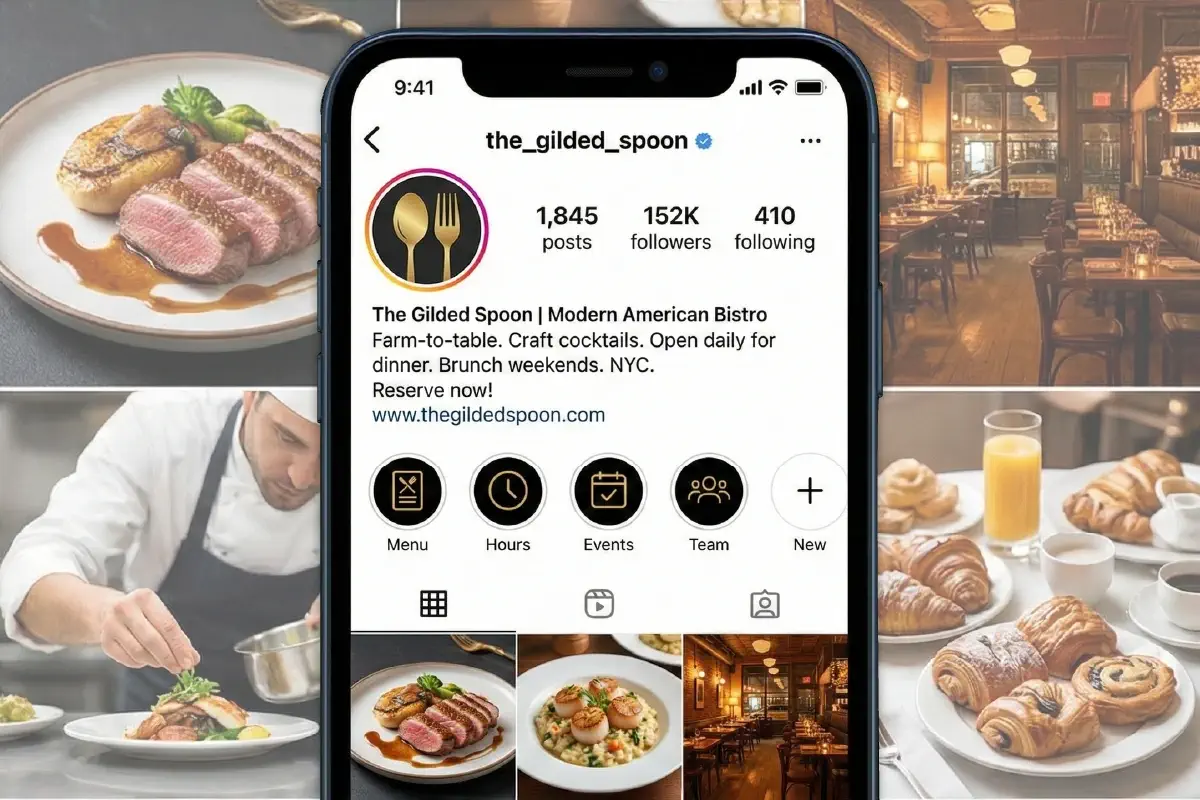
Social media numbers can trick you into thinking your marketing works. A post with 5,000 impressions feels great, but zero orders means zero impact on your bottom line.
The gap between social media metrics and real sales becomes obvious when you look at what these numbers really mean:
| Metric | What It Measures | What It Doesn't Measure |
|---|---|---|
| Impressions | How many times your content appeared on screens | Whether anyone paid attention or was hungry |
| Reach | Number of unique accounts that saw your content | Whether those accounts belong to people in your delivery area |
| Engagement | Likes, comments, shares | Actual intent to purchase food |
| Follower Growth | Account size increase | Revenue increase |
Restaurant owners chase these metrics because they're easy to see and feel good quickly. A social post with 100 likes feels great right away, while building a direct ordering system takes months to show results.
Most diners choose restaurants through Google Search, Google Maps, and delivery apps during a short decision window. Social content supports awareness and repeat visits, but it rarely aligns with immediate ordering intent.
Social media still has its place in restaurant marketing. It helps with:
• Brand recognition for later decision moments
• Showcasing new menu items to existing customers
• Building community among loyal customers
• Providing visual content for your Google Business Profile
The difference lies in knowing that social content supports your direct ordering channels rather than driving immediate sales.
Smart restaurant owners make sure they show up where hungry customers actually decide:
• Local search results on Google Maps when someone looks for "restaurants near me"
• Their own website with easy online ordering
• Direct ordering links in their Google Business Profile
• Email marketing that reaches previous customers at meal times
Success in marketing comes down to numbers that tie directly to revenue:
• Conversion rate from website visits to completed orders
• Average order value
• Customer lifetime value
• Return on ad spend for campaigns targeting hungry searchers
Restaurant marketing strategies often fail because they target the wrong moment in the customer's experience. Instead of trying to make people hungry through social media posts (which rarely works), catch them when hunger naturally strikes.
A single ordering link in your Google Business Profile often brings more sales than months of Instagram content because it meets customers when they're ready to decide. Your marketing should make the path from hunger to ordering your food quick and simple.
Restaurant decisions usually follow a short evaluation loop: proximity, menu clarity, proof, and ordering speed. People don't choose what to eat based on what they've seen all day. They decide based on what's available, looks good, and proves easy to order when hunger hits. Marketing that follows this principle works better.
Restaurant owners often waste their marketing money by talking to people who aren't hungry. Your social media followers might love your food photos, but this attention rarely leads to immediate orders.
Broad targeting generates attention that rarely converts. High-intent channels reach diners during a short decision window, which is where direct orders concentrate.
Think about your own behavior when you're hungry. You probably don't scroll through Instagram to decide what to eat. People usually follow a simple pattern:
1. Feel hunger - Your body tells you it's time to eat
2. Open search or maps - You check Google Maps, search "restaurants near me," or open food delivery apps
3. Review options - You quickly compare 3-5 restaurants based on location, menu items, and ordering ease
4. Place order - You pick what best satisfies your hunger with minimal hassle
This whole experience takes about 5-10 minutes. Most restaurant marketing misses this window completely.
Numbers tell the real story. Research shows 76% of diners who search for "food near me" on their phones visit a restaurant within 24 hours. It also shows 28% of these searches end in a purchase.
Search users are ready to buy - they're hungry and want food now. More than 70% of restaurant searches don't include specific restaurant names (like "pizza delivery" or "breakfast near me"). People often haven't picked a restaurant before they start searching.
Here's where real restaurant decisions happen:
| Platform | Intent Level | Action Timeline | Marketing Priority |
|---|---|---|---|
| Google Search/Maps | Very High | Minutes to hours | Critical Focus |
| Direct Website | High | Immediate | High Priority |
| Food Delivery Apps | High | Immediate | High Priority |
| Email (at meal times) | Moderate | Hours | Medium Priority |
| Social Media | Low | Days/Weeks | Supplementary |
Smart restaurant marketing puts these high-intent channels first. Your marketing budget should match this reality - put more resources into platforms where hungry people make decisions.
Every food purchase starts with one question: "What should I eat right now?" Your marketing needs to catch this exact moment.
Here are the main decision triggers:
• Hunger-based decisions - Your body needs food now
• Time-based decisions - Regular meal times (lunch break, dinner time)
• Occasion-based decisions - Special events need planning ahead
• Recommendation-based decisions - Friends and family suggestions
The hunger moment includes several key factors:
• Proximity matters - 67% of customers won't travel more than 5 miles for food
• Speed is essential - 89% of customers want quick service/delivery
• Ordering friction kills conversions - Each extra ordering step cuts completion rates by 27%
• Price sensitivity peaks - Value becomes more important when people are hungry
Smart restaurant marketing captures these moments by:
• Keeping Google Business Profile updated with current hours, menu links, and ordering options
• Making sure websites load fast on mobile (under 3 seconds)
• Simplifying online ordering (3 clicks or less to purchase)
• Showing value-focused items at key decision points
Small independent restaurants see the best results when they catch people at hungry moments. About 82% of food searches include "near me" or location terms. Local SEO and a well-maintained Google Business Profile often bring more sales than months of social posts.
Looking at conversion rates shows how targeting hungry people works better than broad marketing:
• Restaurant search ads see 12-15% conversion rates for hunger-related keywords
• Restaurant websites with easy-to-find ordering buttons convert 25% better
• Emails sent during meal times (11:30am-12:30pm, 5:00pm-7:00pm) do 41% better
Most restaurant marketing makes one big mistake - trying to make people hungry. Hunger happens naturally - you just need to be there when it does.
The best restaurant marketing makes sure you're visible, appealing, and easy to order from when hunger strikes. This means moving resources away from broad awareness and toward being ready when people decide what to eat.
Restaurants that grow the most have learned to master this hunger-moment marketing. They make sure they're a clear choice right when potential customers ask: "What should I eat right now?"
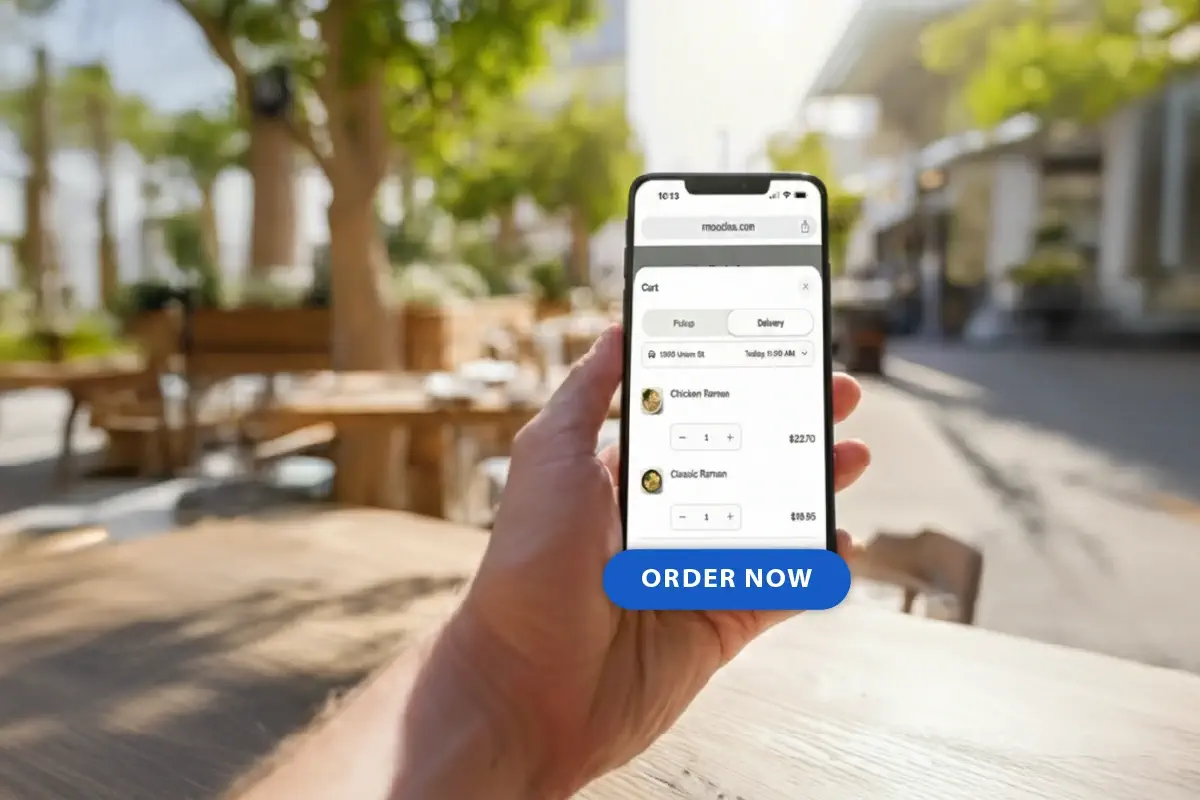
Marketing converts when the ordering path is short, mobile-first, and obvious on every high-intent entry point.
Restaurant owners often miss the vital connection between customer interest and completed orders. Your stunning food photos and crafty social posts might catch eyes, but something goes wrong in those final moments that stops hungry customers from placing orders.
Money slips away with each extra step between hunger and ordering. Restaurants with simple, direct ordering paths on their websites get 30% more online orders [1] than those with complex processes. This gap between marketing work and actual sales could be your biggest source of untapped profit.
Friction shows up whenever customers work harder than needed to place an order. Your completion rates drop by 27% [2] with each new step in the ordering process. This hidden conversion killer shows up in many ways:
• Too many clicks to find the menu
• Complex login steps
• Pages that load slowly
• Extra form fields
• Steps that leave customers guessing
Small issues on your end create big headaches for hungry customers. A pizzeria owner couldn't figure out why email promotions brought zero orders. The answer came from looking at how customers had to click through four different pages before they could order [3]. Too many roadblocks stood between the email and checkout, so customers gave up.
Just one second of page loading delay cuts conversions by 7% [4]. This means restaurants lose real money with every moment of tech trouble. The hard truth? Hungry customers won't wait long.
Smart restaurant marketing creates the shortest route between customer interest and finished orders. This means getting rid of anything that slows things down:
| Friction Point | Impact on Orders | Solution |
|---|---|---|
| PDF-only menus | Slower loading, poor mobile experience | HTML-based menu with structured data |
| Multi-page checkout | 20%+ abandonment increase | One-page checkout with minimal fields |
| No direct ordering link | Forces additional navigation | Prominent "Order Now" button on every page |
| Location buried in website | Customers can't find you | NAP (Name, Address, Phone) in navigation bar |
Google helps one in three diners (33%) find their next restaurant [5]. Most restaurant websites drop the ball right when hungry searchers land on them. A PDF menu, some pictures, and contact details won't win over today's customers.
Modern restaurant customers respond to specific website features:
• Simple User Flow: Many restaurant websites hide or complicate the path to ordering [6]. The site should guide visitors toward ordering with minimal clicks.
• Smart CTA Placement: Order buttons belong where user interest peaks, not scattered randomly. Soho House added geo-IP tracking and sticky CTAs to its restaurant sites, boosting reservation confirmations by 39% [6].
• Mobile-First Design: Half of all diners order takeout or delivery 1-3 times weekly, mostly from phones [2]. Your site must work perfectly on mobile devices.
• Built-in Ordering System: A good online ordering system built right into your website makes things easy for customers [7]. You'll gather valuable customer data while they enjoy smooth ordering.
Great restaurant websites work like sales machines, not fancy brochures. Everything should push toward one goal: turning visitors into buyers.
A mental clock starts ticking the moment hungry customers land on your site. They decide within 5 seconds whether to order or leave. These moments determine your success.
Customers look for these things right away:
1. Quick Menu Access: Menu items should jump out at first glance.
2. Easy Ordering: The "Order Now" button should grab attention instantly.
3. Fast Service: Show delivery and pickup times up front.
4. Good Value: Make your best deals obvious.
5. Trust Signals: Put reviews and quality markers where they're easy to spot.
Restaurant websites should highlight these elements above all else. Clear calls-to-action in the right spots make customers happy and boost sales [2].
Digital ordering has grown 300% faster than dining in since 2014 [8]. Restaurants with smooth online ordering see takeout profits jump by 30% [8]. This happens because customers spend 20% more when ordering through tech [8]. Yet many restaurants still don't invest enough in creating smooth digital experiences.
The problems show up in customer complaints. Studies show mobile order complaints in reviews shot up 50% in one year [8]. Mobile order complaints in reviews often cite timing and order readiness as top issues. Chipotle added separate prep lines just for digital orders to keep things running smoothly with high online order volumes [8].
Turning hungry browsers into paying customers means clearing every roadblock between interest and purchase. Your website should work round the clock to turn visitors into customers with as few steps as possible.
A practical next step is an ordering-path audit. Place a test order on mobile, count clicks from homepage to checkout, and document load time and drop-off points.
Third-party delivery platforms control restaurant marketing. These platforms focus on their own success metrics, downloads, user participation, marketplace control, while restaurants fight to stay profitable. This creates a marketing approach that puts platform interests ahead of restaurant profits.
Marketplace volume can rise while profit per order falls. Operators need metrics that separate revenue from margin and track profit per channel.
Third-party platforms and restaurant profit goals don't mix well. Here's the reality: these platforms take 15-30% commission on every order. This cuts deep into your profit margin. Most independent restaurants run on thin 3-5% profit margins, so these commissions often mean breaking even or losing money on platform orders.
The clash shows up everywhere in how restaurants and platforms work together:
| What Platforms Optimize For | What Restaurants Actually Need |
|---|---|
| Maximum order volume whatever the profit | Profitable orders that boost the bottom line |
| User retention on their platform | Customer loyalty to your restaurant |
| Marketplace control and visibility | Direct customer relationships |
| Their branded experience | Your restaurant's unique identity |
| Data collection for their algorithms | Customer data you can use for marketing |
These platforms hold onto vital customer data that restaurants need for good marketing. Restaurants can't build relationships or target their marketing without access to customer emails, order history, or choices.
This data gap creates big problems down the road:
1. Restaurants lose customer ownership. When people order through third-party apps, they become DoorDash or UberEats customers, not yours. These platforms control customer relationships and often block restaurants from reaching out to these diners later.
2. Marketing money helps platforms first. Ads on third-party marketplaces make you more dependent on them. You pay more to show up in search results, giving more money to platforms that already charge high fees.
3. Profit margins shrink. Fees start at 15% and can go up to 30% or more. Restaurants with 5% profit margins often lose money on these orders.
The numbers tell the story clearly. A $30 order through a platform charging 30% leaves just $21 for the restaurant. After food costs (usually 30%) and running expenses, restaurants often lose money on each platform order.
Direct orders through restaurant channels skip these fees. The same $30 order through your own website keeps all the revenue. After card processing fees (2-3%), restaurants make much more from direct orders.
The profit difference shows why restaurants should focus on direct ordering:
Third-Party Order Economics:
• $30 order - 30% commission = $21 received
• $21 - $9 food cost (30%) = $12 contribution
• $12 - operational costs = minimal or negative profit
Direct Order Economics:
• $30 order - 3% payment processing = $29.10 received
• $29.10 - $9 food cost (30%) = $20.10 contribution
• $20.10 - operational costs = healthy profit margin
Smart restaurants use third-party platforms carefully while pushing direct orders. The best ones use these tactics:
• Turn platform customers into direct buyers
• Put QR codes on packages that link to their ordering system
• Give small rewards (5-10% off) for direct orders
• Create simple loyalty programs just for direct customers
Independent restaurants that switched focus from platforms to direct profits saw amazing results. Those with dedicated direct ordering plans boosted their profit margins by 25-30% compared to platform-dependent ones.
Marketing efforts on Google Business Profile work better than platform promotions. Restaurants with good Google listings get 22% more direct orders than those focused on platform visibility.
Restaurant marketing needs a new way to measure success: profit per order matters more than total orders. This changes marketing from platform-focused to profit-focused.
Moving forward means using practical marketing that builds customer relationships:
• Make ordering easy on your website
• Set up Google Business Profile with direct ordering links
• Get customer emails the right way
• Send targeted emails that bring direct orders
• Have staff promote direct ordering to customers
A complete Google Business Profile with direct ordering links brings in 5-10 times more direct orders. For many operators, that difference materially changes unit economics.
Having your own customer data lets you market better than platforms ever could. Restaurants using their customer data see 4-5 times better results than generic platform promotions.
The money adds up fast. A restaurant making $1 million yearly through platforms at 30% commission pays $300,000 in fees. Moving half those orders to direct channels saves $150,000 each year, often the difference between survival and success.
Restaurant marketing usually fails because it tracks the wrong things. Views, likes, followers, and even order numbers can go up while profits go down if orders come through high-fee channels.
Successful restaurants now focus on one key measure: profit per customer. This naturally leads to more direct orders, repeat business, and higher-margin items, everything that helps restaurants last.
The best marketing builds your brand while creating clear paths to profitable orders. It's not just about being seen, it's about building systems that make real money.
| Marketing Issue | Core Problem | Impact on Sales | Key Metrics Affected | Recommended Solution |
|---|---|---|---|---|
| Not Listening to Customers | Mistaking visibility for buying interest | Money wasted on audiences that don't buy | Impressions, reach, involvement | Track metrics linked to revenue (conversion rates, order value) |
| Reaching Everyone Instead of Hungry Customers | Advertising to general audiences rather than ready buyers | Poor returns on marketing investment | Social media followers, brand awareness | Focus on high-intent channels (Google Maps, direct website) during meal times |
| Complex Ordering Process | Too many steps between interest and purchase | Each extra step reduces completion by 27% | Website bounce rates, cart abandonment | Create simple ordering with fewer clicks (3 or less) |
| Platform-Dependent vs Profit-Driven | Heavy dependence on third-party platforms | Profit margins shrink by 15-30% in fees | Gross order volume, platform metrics | Build direct ordering channels and own customer data |
Effective restaurant marketing connects with hungry customers right as they decide what to eat. Restaurants often waste marketing resources by building a social-first presence. They should focus on reaching customers who actively search for food. Data shows hungry people check Google Maps or search "restaurants near me" instead of browsing Instagram to pick their next meal.
Smart restaurant owners understand this reality. They know marketing must create the shortest path between customer hunger and a completed order. Every extra step in this process cuts conversion rates and costs valuable sales.
On top of that, it makes sense to move away from third-party platforms toward direct ordering channels to boost profit margins. Customers who order through your website help you avoid commission fees of 15-30%. This instantly increases profits on each sale.
The best restaurant marketing strategies focus on four key areas:
• Optimizing your Google Business Profile with accurate information and direct ordering links
• Creating a frictionless website ordering experience with minimal clicks
• Capturing customer data to target marketing campaigns
• Measuring success through profit-related metrics rather than engagement-only metrics
Restaurant owners see immediate results after implementing these changes. Many businesses mentioned in this piece increased sales by over 300%. They simply redirected their marketing efforts toward channels where hungry customers make decisions.
Start these strategies today by checking your current digital ordering flow. Count the clicks needed to complete an order and spot friction points. Then remove these obstacles until ordering becomes effortless for customers. Your restaurant marketing will finally deliver sales results that match your effort.
These proven restaurant marketing strategies focus on converting hungry customers at their moment of decision, rather than chasing engagement-only metrics that don't drive sales.
• Target hungry searchers, not social browsers - 76% of "food near me" searches result in restaurant visits within 24 hours, while social media likes rarely convert to orders
• Eliminate ordering friction ruthlessly - Each additional step in your ordering process reduces completion rates by 27%; streamline to 3 clicks or fewer
• Prioritize direct orders over third-party platforms - Commission fees of 15-30% can eliminate profit margins entirely; direct orders through your website keep 100% of revenue
• Optimize for the 5-second decision window - Hungry customers decide whether to order or leave within 5 seconds of landing on your website; make ordering buttons prominent and immediate
• Focus on Google Business Profile over social media - Complete profiles with direct ordering links generate 5-10x more orders than incomplete ones, intercepting customers at peak hunger moments
The restaurants achieving 312% sales increases shifted their marketing from building awareness to capturing existing hunger when it naturally occurs. Success comes from being visible and convenient exactly when people ask "What should I eat right now?"