5 Signs Your Restaurant Software Stack Is Too Complicated

5 Signs Your Restaurant Software Stack Is Too Complicated
Restaurant software should solve problems, not create them.
But across the industry, owners find themselves trapped in digital quicksand, juggling multiple platforms, training staff on complicated interfaces, and watching technology costs spiral while operational efficiency stagnates. The restaurant management software market hit USD 5.79 billion in 2024 [6] [7] and projects growth to USD 14.70 billion by 2030 at 17.4% annually [6], yet many operators question whether all this technology actually makes their lives easier.
The answer often comes down to complexity.
When your tech stack becomes a towering collection of disconnected tools, each promising to streamline operations, you create new problems faster than you solve old ones. Inventory systems that don't talk to your POS. Scheduling apps that ignore labor data. Reporting tools that require manual exports from six different platforms.
Restaurant technology works best when it works quietly in the background. After evaluating over 20 management tools and analyzing real operator feedback, the pattern became clear: simplicity wins [6]. The most effective setups integrate core functions into streamlined platforms that staff can master quickly and managers can trust completely.
Your operation deserves better than software chaos.
The following signs reveal whether your current setup costs more in time, frustration, and missed opportunities than it delivers in actual value. Each symptom points to the same underlying issue: too many tools trying to solve problems that integrated platforms handle more efficiently.
If your restaurant relies on more than four daily software tools, operational complexity is already costing you time, labor, and margin. Most inefficiencies don’t come from lack of technology, they come from too much of it.
Table: Signs Your Restaurant Software Stack Is Too Complicated
| Sign | What’s Happening | Why It Costs You Money | |
| Too many daily tools | Staff logs into 5+ systems per shift | Time lost, errors increase, focus drops | |
| Constant retraining | New hires must learn multiple platforms | Longer onboarding, higher turnover | |
| Data doesn’t sync | POS, inventory, labor, and orders live separately | Inventory waste, pricing errors | |
| Reporting takes hours | Manual exports from multiple tools | Delayed decisions, stale insights | |
| Paying for unused features | Overlapping subscriptions and modules | Monthly software bloat | |

1. You're Using More Than 4 Separate Tools Daily
Answer header: The number of tools your staff touches each shift directly correlates with error rate, training time, and staff frustration. App-switching is one of the fastest ways to degrade operational performance.
Count them.
POS system. Inventory platform. Scheduling app. Table management. Online ordering dashboard. Customer loyalty program. Accounting software.
How many separate applications do you log into during a single shift? If the number exceeds four, your tech stack has crossed from helpful into complicated territory.
Each additional platform creates friction. New passwords to remember. Different interfaces to navigate. Separate data entry points that multiply opportunities for mistakes.
Your staff feels this complexity most acutely, jumping between systems while trying to serve guests, process orders, and manage daily operations. The mental overhead of remembering which information lives where drains energy that could focus on hospitality and service quality.
Restaurant operations naturally require multiple functions, but those functions don't require multiple platforms. The most efficient setups consolidate core capabilities into integrated systems that eliminate constant app-switching and reduce the cognitive load on your team.
Four tools or fewer should handle your essential operations. Anything beyond that signals a stack that's working against you rather than for you.
Switching between POS, inventory, and scheduling apps
Restaurant operations demand constant digital juggling. During a typical shift, you're bouncing between systems that refuse to talk to each other:
• Checking POS data for sales trends and payment processing
• Updating inventory counts in a separate stock management platform
• Reviewing employee schedules in workforce management software
• Monitoring online orders from multiple delivery services
• Managing reservations through a table management system
• Tracking customer loyalty programs in a dedicated CRM tool
Every app switch forces you into a new interface with different navigation, separate login credentials, and unique workflows. Your team memorizes multiple passwords, learns various user interfaces, and constantly shifts mental gears between platforms.
The cognitive overhead compounds quickly. Managers waste valuable minutes, hours each week, just remembering which system holds what information. That mental energy could focus on guest service, staff development, or operational improvements instead of navigating software chaos.
Consider the real cost: a shift supervisor spends 15 minutes each day switching between apps, logging in, and finding the right screens. Multiply that across your team and operating days, you're paying staff to fight technology rather than serve customers.
Staff frustration builds when simple tasks require multiple platforms. Checking if an ingredient is in stock shouldn't involve three different systems. Scheduling a server shouldn't require cross-referencing availability in one app with labor budgets in another.
How this leads to fragmented workflows
Split your restaurant software across multiple platforms and watch information scatter into silos that don't communicate.
The operational problems multiply fast.
A single menu change becomes a four-step process: update the POS system, adjust inventory management software, modify the online ordering platform, and revise customer-facing digital menus. Each step creates another opportunity for inconsistencies. Miss one update and guests order items at old prices while your POS rings them up at new ones.
Real-time inventory management disappears entirely. Stock levels refuse to sync between ordering systems and inventory platforms, creating a guessing game that costs money. You over-order perishables that spoil before use or run out of popular items during your busiest hours. Both scenarios hit your bottom line directly.
Staff training transforms from straightforward to overwhelming. New hires face not one or two systems but an entire ecosystem of disconnected tools. Each platform demands different passwords, different interfaces, different workflows. The learning curve stretches onboarding time and increases costly mistakes during those critical first weeks.
Most dangerous of all: fragmented workflows create blind spots in your operation.
Critical patterns disappear when information lives in separate systems. The relationship between labor costs and peak ordering times becomes invisible. Opportunities for menu optimization hide behind disconnected data. Emerging problems stay hidden until they've already damaged your profitability.
Consider the reporting nightmare alone. Generating a complete picture of restaurant performance requires manual exports from multiple sources, spreadsheet gymnastics, and hours of work that could be spent on profitability-generating activities. By the time you compile the data, it's already outdated.
Effective restaurant technology connects these dots automatically. Integrated platforms eliminate the constant app-switching, reduce training complexity, and provide the unified view operators need to make smart, fast decisions.
Your operation deserves software that works together, not against itself.
Fragmented Stack vs Integrated Platform
| Area | Fragmented Software Stack | Integrated Platform | |
| Daily logins | 5–8 systems | 1–2 systems | |
| Staff training | Repeated, inconsistent | Standardized, faster | |
| Inventory accuracy | Manual reconciliation | Real-time updates | |
| Reporting | Manual exports | Live dashboards | |
| Software spend | Overlapping subscriptions | Consolidated cost | |
| Decision speed | Delayed | Immediate | |
Why this matters: Restaurants operating with integrated platforms reduce cognitive load on staff and gain faster operational insight without increasing headcount.
2. Your Staff Needs Constant Training on New Systems
Answer header: High turnover turns complex software into a recurring tax on your operation. Every additional system extends onboarding time and increases early-stage mistakes.
Restaurant staff turnover creates a never-ending training cycle that becomes exponentially harder with fragmented technology. Every new hire faces not just learning your menu and service standards, but mastering an entire ecosystem of disconnected digital tools.
The numbers tell the story clearly.
High turnover meets steep learning curves
The restaurant industry's 75% average turnover rate [1] means you're constantly onboarding new employees. Each person must learn your POS system, inventory platform, scheduling app, loyalty program, reservation system, and delivery tablet interfaces, often within their first week on the job.
Staff members hit cognitive overload fast when faced with multiple systems simultaneously [2]. The challenge compounds because most restaurant employees didn't choose hospitality careers to become software experts. They want to serve guests, prepare food, and create memorable experiences, not troubleshoot tablet crashes or remember which app handles which function.
The data reveals the depth of this challenge:
• 62% of restaurant workers aged 50+ struggle with new technology adoption [2]
• Restaurant managers themselves frequently admit they're not "tech savvy" [3]
• Employees must balance traditional hospitality skills with increasing digital responsibilities [2]
Tech fatigue directly impacts job satisfaction and adds administrative burden to already demanding shifts [2]. The financial impact cuts both ways: a GM might save $20,000 through optimized labor scheduling but quit from burnout, costing $50,000 to replace [2].
Why simplicity wins with workforce management
Intuitive restaurant workforce management software changes the entire training equation. When systems are designed for quick mastery rather than feature complexity, new hires become productive faster and focus on what matters most, taking care of guests.
Well-designed platforms deliver immediate benefits:
Standardized training becomes possible when everyone uses the same system the same way [4]. Cloud-based tools allow staff to review procedures at their own pace [5], particularly valuable for complex recipes or compliance requirements. Mobile accessibility lets employees check schedules and request time off from their phones [5], meeting younger workers' digital expectations.
Most importantly, simplified operations create clear workflows that new employees grasp quickly [6]. Effective workforce management tools track availability, monitor performance, and forecast labor needs automatically [7], reducing the mental overhead required to navigate daily tasks.
The key insight: decide that your new system is the only system [3]. Attempting to run parallel workflows inevitably fails. Management must commit completely or watch staff revert to old habits that undermine your investment.
Restaurant technology should raise capabilities without raising complexity. Systems that naturally show individual performance compared to team averages help staff learn through context rather than formal training sessions [8].
3. Data Doesn't Sync Across Platforms
Answer header: Disconnected data breaks the feedback loop between sales, inventory, and labor. When systems don’t sync, operators lose real-time control over cost and availability.
Information silos destroy restaurant operations from the inside out.
When your POS doesn't talk to inventory, when scheduling exists separate from labor tracking, when customer data lives trapped in individual systems, you've created digital quicksand that swallows time, money, and guest satisfaction.
Inventory mismatches and order errors
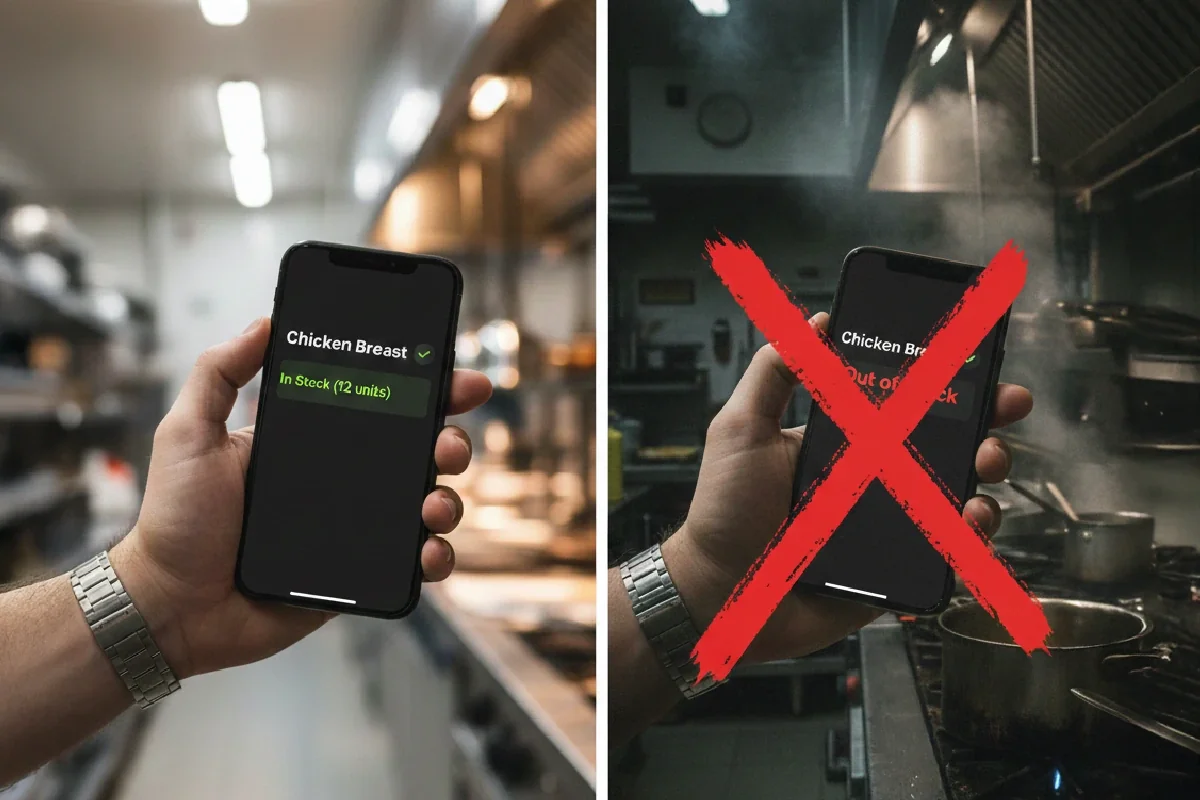
The disconnect between what your systems think you have and what actually sits in storage creates operational chaos. Your POS shows chicken available while inventory records show none. Recipe costs calculate with last month's prices. Stock orders get duplicated because purchasing can't see what's already ordered.
These gaps compound quickly:
• Servers take orders for dishes the kitchen can't prepare
• Kitchen staff waste time searching for ingredients that don't exist
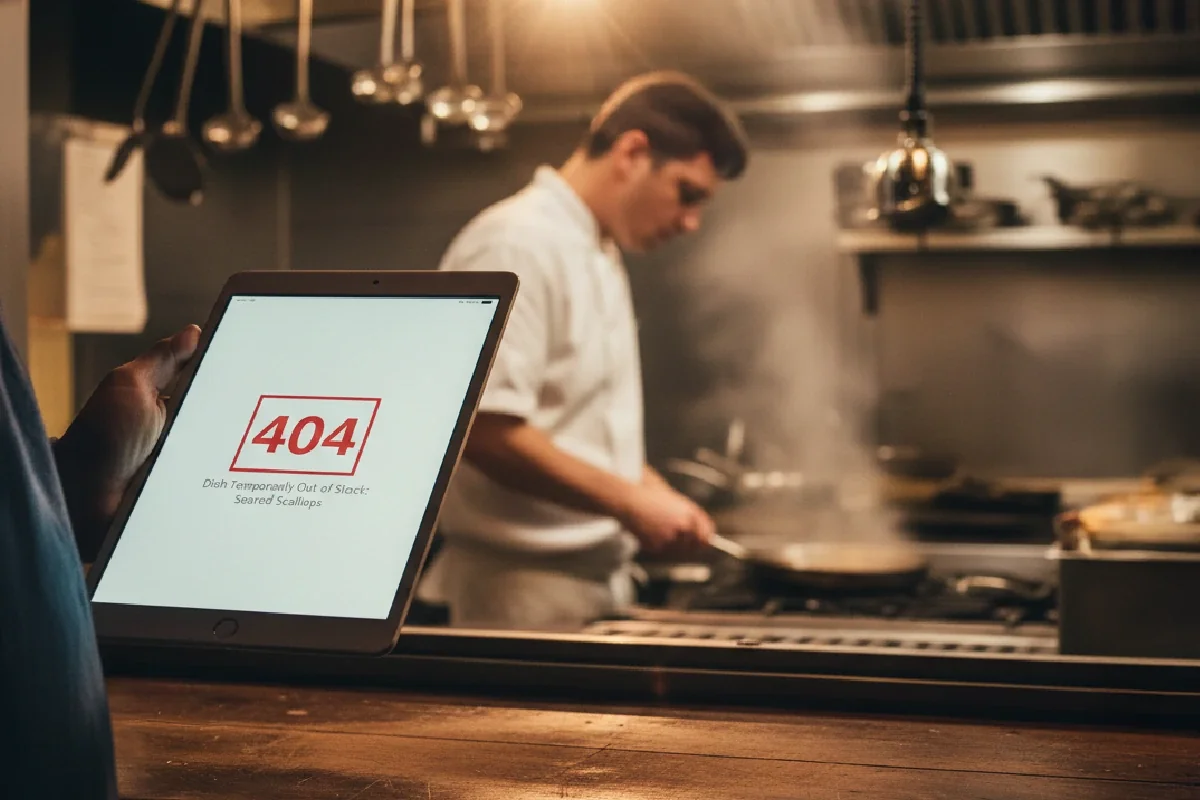
• Guests get frustrated when told their selection isn't available after ordering
• Food costs spiral because purchasing decisions rely on outdated information
Perhaps most damaging, you lose the ability to make real-time adjustments. When your lunch rush hits and you're running low on popular items, disconnected systems can't automatically adjust availability or trigger reorders. By the time someone manually updates each platform, you've already disappointed customers and lost profitability.
The cost of disconnected restaurant stock management software
Manual data reconciliation doesn't just waste time, it bleeds money.
Staff spend hours transferring information between platforms, double-checking inventory across systems, and fixing discrepancies that shouldn't exist in the first place. These administrative tasks pull your team away from customers, where they actually generate value.
Every manual transfer creates opportunities for mistakes. One wrong number in inventory can trigger incorrect purchasing, menu availability errors, or pricing problems. When employees input the same data multiple times across different systems, errors become inevitable.
Customer experience suffers measurably. Guests who order unavailable items or wait while staff verify stock across platforms walk away frustrated. These negative interactions damage reviews, reduce repeat visits, and ultimately cost more than any software investment.
The solution requires integrated restaurant stock management software that creates a single source of truth. Inventory updates happen automatically with each sale. Purchase orders generate based on actual usage. Menu items become unavailable when ingredients run low.
This isn't about convenience, it's about operational reliability that protects profits and keeps guests happy.
4. Reporting Takes Hours Instead of Minutes
Answer header: Feature bloat increases subscription costs without increasing outcomes. Most independent restaurant operators restaurants pay for enterprise-level functionality they never touch.
Data tells the story of your restaurant's performance. But when that story lives scattered across six different platforms, telling it becomes a full-time job.
Manual exports from multiple systems
The reporting ritual starts the same way every week: another morning spent playing digital archaeologist instead of running your restaurant.
• Export sales data from your POS system into spreadsheets
• Download separate inventory reports from stock management tools
• Extract labor costs from scheduling software
• Pull customer information from loyalty platforms
• Manually stitch everything together to calculate basic metrics
Each step burns time you don't have. Worse, the data grows stale as you work through the exports, making decisions based on yesterday's numbers instead of real-time insights. Manual consolidation multiplies error opportunities with every copy-paste operation and formula creation.
Restaurant operators routinely spend hours pulling reports instead of focusing on activities that drive business forward [9]. One global chain found that fragmented analytics operations significantly hampered their ability to make timely decisions, with teams frequently struggling just to obtain basic data support [10].
The math doesn't work. Time spent compiling reports is time not spent analyzing what the numbers actually mean.
How integrated systems change the game
Modern restaurant management software flips the script entirely. Instead of hunting data across platforms, everything flows automatically to a central analytics engine [11].
The difference shows immediately:
Real-time visibility becomes standard. Managers view current performance metrics instantly from any device, enabling immediate operational adjustments [11]. Automated alerts flag inventory shortages, missed sales targets, or labor costs exceeding thresholds, without manual monitoring.
Role-specific dashboards deliver precisely the information each person needs. Executives see high-level performance trends while shift managers access detailed operational data relevant to their responsibilities [11]. No wading through irrelevant numbers to find what matters.
Manual data transfer disappears completely. Restaurants reclaim hours previously lost to administrative tasks [12], redirecting that energy toward identifying top sellers, analyzing promotion impact, and optimizing menu pricing based on comprehensive data sets.
The best restaurant management software transforms complex operational data into actionable insights through intuitive visualizations and customizable reports [13]. This capability enables informed, data-driven decisions about everything from staffing levels to menu pricing, driving both efficiency and profitability through better information, faster.
Why Integrated Systems Outperform Fragmented Stacks
Order Placed
↓
POS Records Sale
↓
Inventory Updates Automatically
↓
Labor Forecast Adjusts
↓
Dashboard Reflects Real-Time Performance
↓
Manager Takes Action Same Day
5. You're Paying for Features You Don't Use
Monthly subscription costs quietly drain restaurant budgets through feature bloat and redundant capabilities. Most operators don't realize how much they spend on software functions that sit unused.
Overlapping subscriptions and unused modules
Every restaurant tech platform comes with its own monthly fee. As your stack grows, these individual costs compound into serious budget drain. The pattern repeats across operations:
• POS systems with built-in inventory tracking, yet separate inventory subscriptions continue
• Scheduling platforms with reporting features that duplicate existing analytics tools
• Table management systems offering CRM capabilities alongside dedicated customer platforms
• Multiple systems each containing their own version of sales reporting
Beyond wasted dollars, overlapping features create operational confusion. Staff duplicate work across platforms or ignore valuable capabilities entirely because they don't know which system serves as the official source.
Small restaurants often pay for enterprise-grade modules designed for multi-location chains. Advanced analytics, complex inventory management, and corporate reporting tools that single-location establishments never touch, but pay for monthly.
How to audit your restaurant software stack for bloat
Smart operators conduct regular technology audits to identify and eliminate unnecessary costs:
Start with a complete subscription inventory. List every software payment your restaurant makes, including monthly fees for each platform. Document which specific features you actually use versus what you're paying to access.
Next, identify capability overlap across different systems. Map out where multiple platforms offer the same functionality, inventory tracking, customer data, sales reporting, staff scheduling.
Calculate total technology costs as a percentage of profitability. Factor in both subscription fees and the staff time required to manage multiple systems daily.
Finally, research integrated alternatives that consolidate multiple functions into single platforms. Modern restaurant management software often replaces three or four separate tools while reducing overall costs.
Include your team in this evaluation process. Front-line staff know exactly which features they use and which remain untouched. Their insights prevent eliminating tools they rely on while identifying expensive capabilities nobody needs.
The audit reveals opportunities to streamline both costs and operations simultaneously.
Hidden Cost of Software Complexity (Monthly Example)
• Extra staff time managing tools: 15–30 hours
• Reporting/admin labor: $400–$900
• Overlapping software subscriptions: $200–$600
• Training inefficiency from turnover: $500–$1,500
Estimated monthly cost of complexity: $1,100–$3,000
Conclusion
Restaurant software complexity quietly bleeds money, time, and opportunity from your operation.
The signs are clear: too many daily logins, endless staff training cycles, data that refuses to sync, reporting marathons that should take minutes, and subscription bills loaded with unused features. Each symptom points to the same underlying issue, your technology works against you instead of for you.
The solution isn't more software. It's better software.
Integrated platforms eliminate the app-switching chaos that fragments your workflow. Staff learn one system instead of six. Data flows automatically between functions. Reports generate instantly. Subscriptions consolidate into platforms that actually deliver value.
Take inventory of your current setup during your next shift. Count those separate logins. Time your reporting process. Calculate what you're paying for features that sit unused. The results will likely shock you, and reveal exactly where streamlined alternatives could save both money and sanity.
Your restaurant technology should work as quietly and efficiently as your best employee. When it does, managers stop troubleshooting systems and start focusing on guests. Staff spend time serving customers instead of wrestling with confusing interfaces. Owners make decisions based on real-time data instead of yesterday's manually compiled spreadsheets.
The shift toward simplicity isn't just operational, it's financial. Reduced training costs, fewer errors, faster decisions, and consolidated subscriptions add up to real bottom-line impact.
Your operation deserves software that supports growth instead of creating obstacles. Less really can become more when you choose platforms built for restaurant operators, not software engineers.
Start evaluating integrated alternatives today. Your staff, your customers, and your profit margins will thank you.
Key Takeaways
• Restaurant software should reduce complexity, not add to it. If your team uses more than four systems daily, operational drag is already costing you time, labor, and margin.
• Fragmented software stacks create hidden costs through app-switching, manual data entry, training inefficiencies, and delayed decision-making.
• High staff turnover amplifies software complexity. Every additional platform extends onboarding time and increases early-stage mistakes during peak shifts.
• Disconnected systems break the feedback loop between sales, inventory, and labor, making real-time adjustments nearly impossible.
• Manual reporting is a warning sign. If performance insights require exports and spreadsheets, decisions are being made too late to protect profit.
• Overlapping subscriptions quietly drain budgets. Many independent restaurant operators restaurants pay for enterprise-level features they never use.
• Integrated platforms outperform tool-heavy stacks by consolidating workflows, reducing cognitive load, and delivering real-time visibility across operations.
• Simpler systems are easier to train, easier to trust, and easier to scale, especially for single-location and growing multi-location operators.
• The goal of restaurant technology is not more features, but better outcomes: faster decisions, fewer errors, and smoother shifts.
See What Chowly Can Do for Your Restaurant
Get Free DemoRelated Articles

The 10 Best Restaurant Online Ordering Systems (2026)
The 10 best restaurant online ordering systems for 2026, compared — real published pricing, per-order fees, honest pros and cons, and best-fit picks.

Best Restaurant Management Software for Restaurants (2026)
The 12 best restaurant management software tools for 2026, organized by category — with real starting prices sourced June 2026 and honest best-fit picks.

Toast vs Square for Restaurants: Which POS Wins in 2026?
Toast vs Square, settled by use case. Official June 2026 pricing, processing rates, hardware, and contracts — and why Chowly runs on top of either POS.